How To: Develop Sales Channels For A New Product
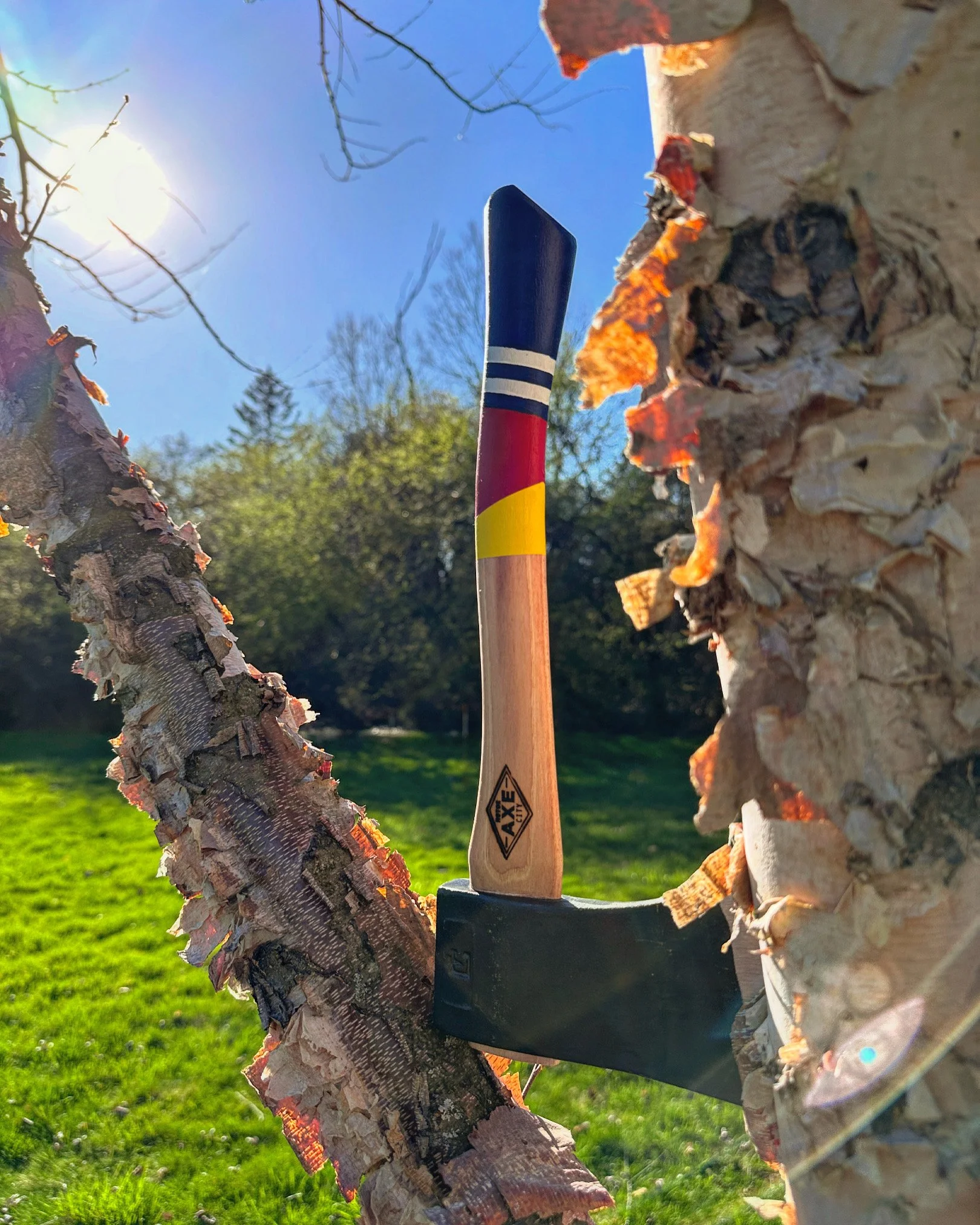
Do you have an idea for a new product, or are you working on building your business? It’s not always easy to determine the best way to grow. We asked David George, Founder and Head Creative of Motor City Axe, for his top recommendations for spreading the word about something new and growing sales.
Step #1: Consider a Niche Industry
[Custom Axes] are a very niche industry. If you're Googling, like, t- shirts or greeting cards or something, you're gonna get hundreds of thousands of options. You Google “custom axes”, there's only a couple hundred to maybe thousand-ish [results]. It was an easier industry to penetrate.
Step #2: Make Outreach Part Of Your Routine
At least once a week I try to reach out to a potential new partner. It's more of a psychological thing, I call all my customers partners. I think that makes it seem like you guys are in it together rather than just, “Hey, you're paying me for this service.” I landed my biggest account with Motor City Axe on Instagram. I messaged Bespoke Post, “Hey, do you guys ever work with small businesses?” And they go, “Actually, we have a huge initiative right now around that message. Email us here.” I do about 200-400 axes a year for them. That has been a great sales channel for me because other businesses have reached out to me saying, “Hey, we've seen you on Bespoke Post. We'd love to talk with you.” So, whether that's me seeing something in a magazine [or online], reaching out [once a week].
Step #3: Leverage Existing Relationships
Moosejaw [where I used to work, was] the first company to take a chance and work with me. [They] ordered 100 hatchets and that got me a little more clout. I could go to other businesses who were more established and say, “Hey, I'm doing this with Moosejaw. Do you want to do something like this as well?” As it's a more niche industry, [I] have a lot of people reaching out to me. The worst somebody can say is no, but the best they can say is yes. Right?
Step #4: Make Outreach Personal
I try to find a direct person [to email]. I do a bit of research and I'll pop on LinkedIn and see if I can find the direct contact. I introduce myself and say, “Hey, my name is David George. I'm the Founder and Creative behind Motor City Axe.” [I] pitch our core mission statement, that we believe in getting people outdoors. I'll look at the company's website and try to make a correlation between what I preach like, “Book a trip, grab an axe, hit the trails.” That's one of the slogans I use. “We aim to help [people] reconnect with nature and to reconnect with yourself, encouraging people to get outside”. [I] position all of that within that email, try to tie in something I see on their site and say, “Hey, I think XYZ product would be a great fit for you. Or we could do something custom like I've done here for somebody else. I'd love to set up a time to connect.” And [I] usually send that via email or on Instagram.
Step #5: Follow Up
I like to think of myself as a relationship-building person. I think it's worth having conversation[s] with anyone you can to grow your network. I continually follow up with people even if they think I'm getting annoying. If I don't hear back within three weeks, I'll send another message. [If] I don't hear back after that, typically I'll let it go another month and a half, and then ping again. I usually follow all of these companies online as well, on at least Instagram, Facebook, and sometimes even on LinkedIn. I don't know if I'm reaching out to a generic contact [email] who's receiving those emails [or] managing the socials. So, I try to hit them from a couple different angles. If they're not responding or interested, I'll let it be. Then maybe a year later or so, I'll say, “Hey, I reached out last year. Just wanted to reach out again.”