How To: Grow and Move Up in a Company
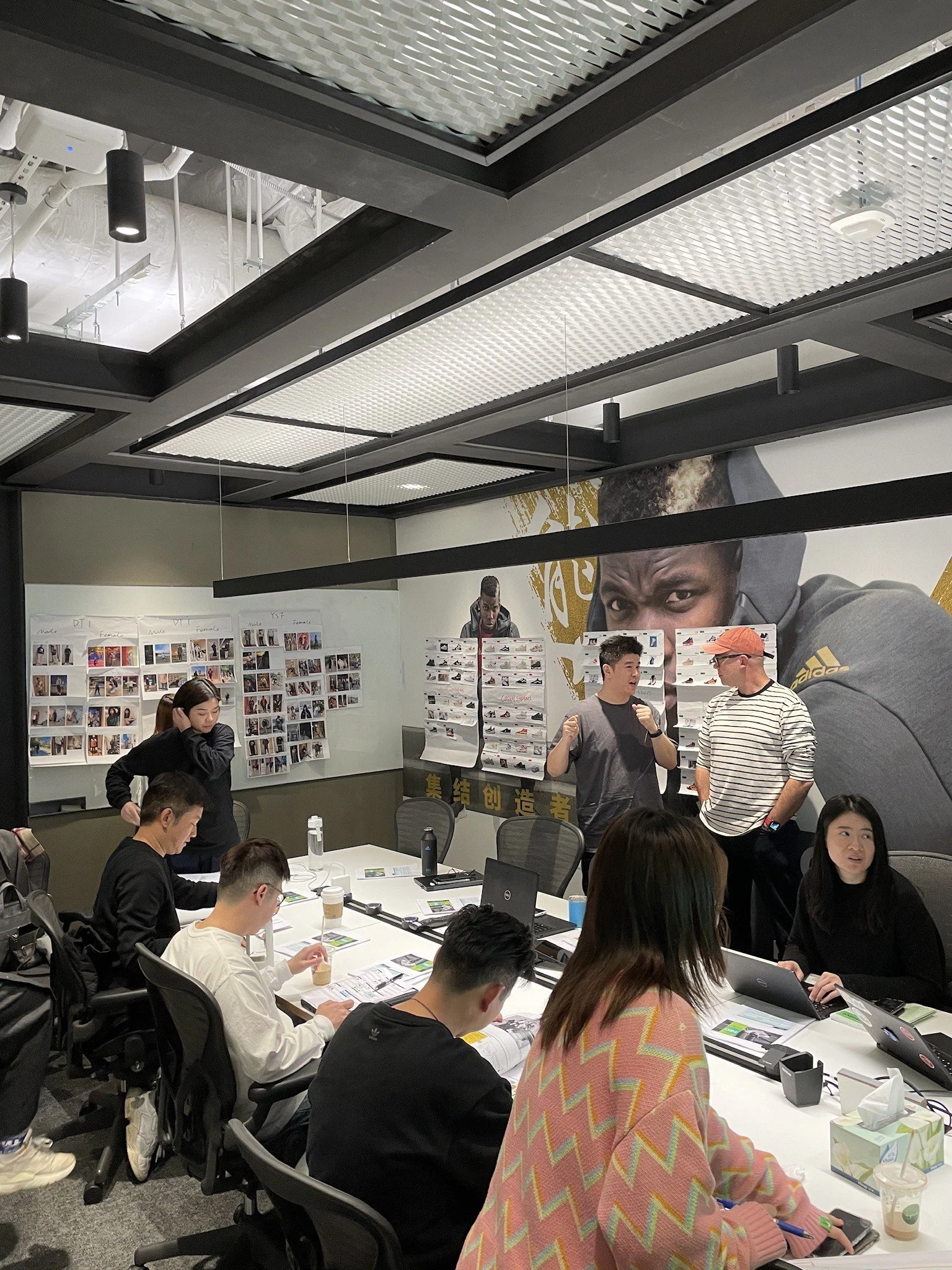
Photo courtesy of Eric Lonsway (second from right)
Eric Lonsway, who worked at Nike for 30 (not all consecutive) years, gives us some personal insight into how he learned to evolve and find new opportunities within the same company.
Figure out where you want to go: When I started working [at Nike], I didn't know what a product manager was. I went to a sales meeting and was like, “That's kind of a cool role.” But I had things to do in retail as well. They weren't going to look at me for that–until I was in a position where I was communicating to them what I was seeing on a regular basis. And they happened to like my analysis of what I was seeing. And somebody went, “We should talk to him.” That's where it started.
I think I have the record at Nike for the longest time as a Product Line Manager, but in the end, I don't think it was bad, because I was able to grow every single business I was in. You definitely have to, no matter what, say, “I'd like to go there, how do I get to it?” You're going to get different answers from different people. Reach out and find people who can be mentors for you.
Let people know you’re interested: I think it's important that you always communicate where you'd like to go. Always. You have to be your own advocate. You have to talk through things, and that's hard a lot of times. I was very happy being in the background, and people took credit for what I did. I was okay with that because I was getting stuff done, I was getting recognition from the person who was taking the credit for it, and they were helping me along. I found out later [that] you get to a certain point where–if people don't recognize that you're the one doing it, it gets tougher.
So that's where this “advocate for yourself” comes in. You can't just sit back and hope for the best. If you have a good leader and you tell them, “Hey, I want to do this,” they'll go out and talk to other leaders and their bosses and go, “This person's doing well (or not doing well or whatever), but they want to do this.” Communicate what you want to do and then do a really good job at what you do.
Work on yourself: I always used to preach, “Progress, not perfection.” Perfection is unattainable, it's a little bit of a waste of time. But you can always make yourself and the team better, right? You can always make that progress and move forward. I think that's important because sometimes we all get into this mode where you just get down and are like, “We're gonna make this perfect.” And you can't. The world doesn't work that way. So have fun. Move forward. Learn and move on. Make mistakes.
Also, mentor other people because I always found I learned as much from them as I taught them. It goes both ways. As long as you're open to it, you're gonna go, “I never thought of that.” Or you might [hear that] you're perceived a certain way that you didn't know about. Positive or negative, it doesn't matter. But you can go, “Oh, I can use that,” or, “Oh, I probably should change that.”
Be open to possibilities: You always have to know where you want to go, but be open to things that might take you to other places. I knew which categories I wanted to get into and which ones I was like, “It's cool if I never get there.” You should always be trying to learn something, and if you are, you're gonna see other things. You’ll go, “I didn't know that was what I wanted to do. But I want to go there now. Want to try that.” Even if you end up going, “Not for me,” you can always come back. With the exception of my first interview for my job in retail, I never applied for a job internally–I always got either recommended or called in.
Usually you'll get asked twice. If the second time you say no, you're never asked again. That says something to leadership about what you're willing to do for the company. What you don't know is what you don't know–it might be a critical experience that will actually help you get to where you want to go. You have to trust, especially if there's leadership that you've spoken to, that you have a good feeling about, a good rapport with, that they're trying to do the right thing by you. When they offer you an opportunity, take that opportunity. No matter what, you're going to learn something.