Auctioneer

PHOTO COURTESY OF DAVID BARKOFF
When you think of an auctioneer, maybe you’re like us and imagined someone standing at the front of a crowd on a podium with a gavel. It turns out things are done a little differently these days. To learn more about what this job is like today, we spoke with David Barkoff, an auctioneer based outside of Boston, MA.
Name: David Barkoff
Occupation: Senior Vice President at Heritage Global Partners
Okay, But What Do You Do?: [I] buy low, sell high. We're just solving a problem – we're trying to buy other people's goods [they’re looking to get rid of] and sell them for a profit.
Can you walk me through your career to date?
[Starting here] was my second job out of college. [At] my first job, I worked for a commercial real estate company in San Francisco for 15-18 months. I learned a lot about business development and cold calling and rejection and just kind of sticking with it. Trying to shake people down to buy a building, lease a building, find some space, get out of space– just that whole aspect of commercial real estate. But I found it kind of boring and stagnant. In San Francisco we’re bound by mountains and water and limited territory, so to speak. And I had quit my job and was going to take the next month or two months to–I guess–drink beer and have fun and figure out something.
My best friend's father and his uncle had started a company years ago. Actually, their family started a company in the 1930s and they raised a couple hundred million dollars from Texas Pacific Group and other big companies to roll up [acquire and merge] the industrial auction space, similar to when eBay started. Our principals were friends with Meg Whitman [President and CEO of eBay] and others in that timeframe, and they wanted to roll out, essentially, the eBay for the industrial asset marketplace, where it was either business to business or business to consumer to buy industrial assets. But they couldn't price an IPO, [so] they took the company back [under their control] in 2009. That’s when I got a phone call that said, “I heard you're just drinking beer looking for your next job. Why don't you come work for me?” The rest is history. I bought computers and hired a janitor...and now we have a bunch of divisions and almost 100 employees.
That's crazy!
It's been fun.
Does this have less limits on it than the San Francisco job?
Yeah, there is no limit. It’s anybody with anything-surplus anywhere in the world. Whether that's financial assets or real estate or capital equipment, we act as a buyer and either try and buy it and resell it for a profit, or we get hired by those companies to sell whatever the given surplus is. We have certain industries and domain expertise, if you will. But by and large it's semiconductor equipment in Singapore, it's a brewery in Texas, it's anything in between.
Are you zipping around to Singapore and Texas all the time?
Yeah, I fly. Our business has changed a lot since Covid and how we look at things or how we physically approach them. But prior to Covid, I was doing close to 100 nights a year in a hotel and a couple hundred thousand miles a year.
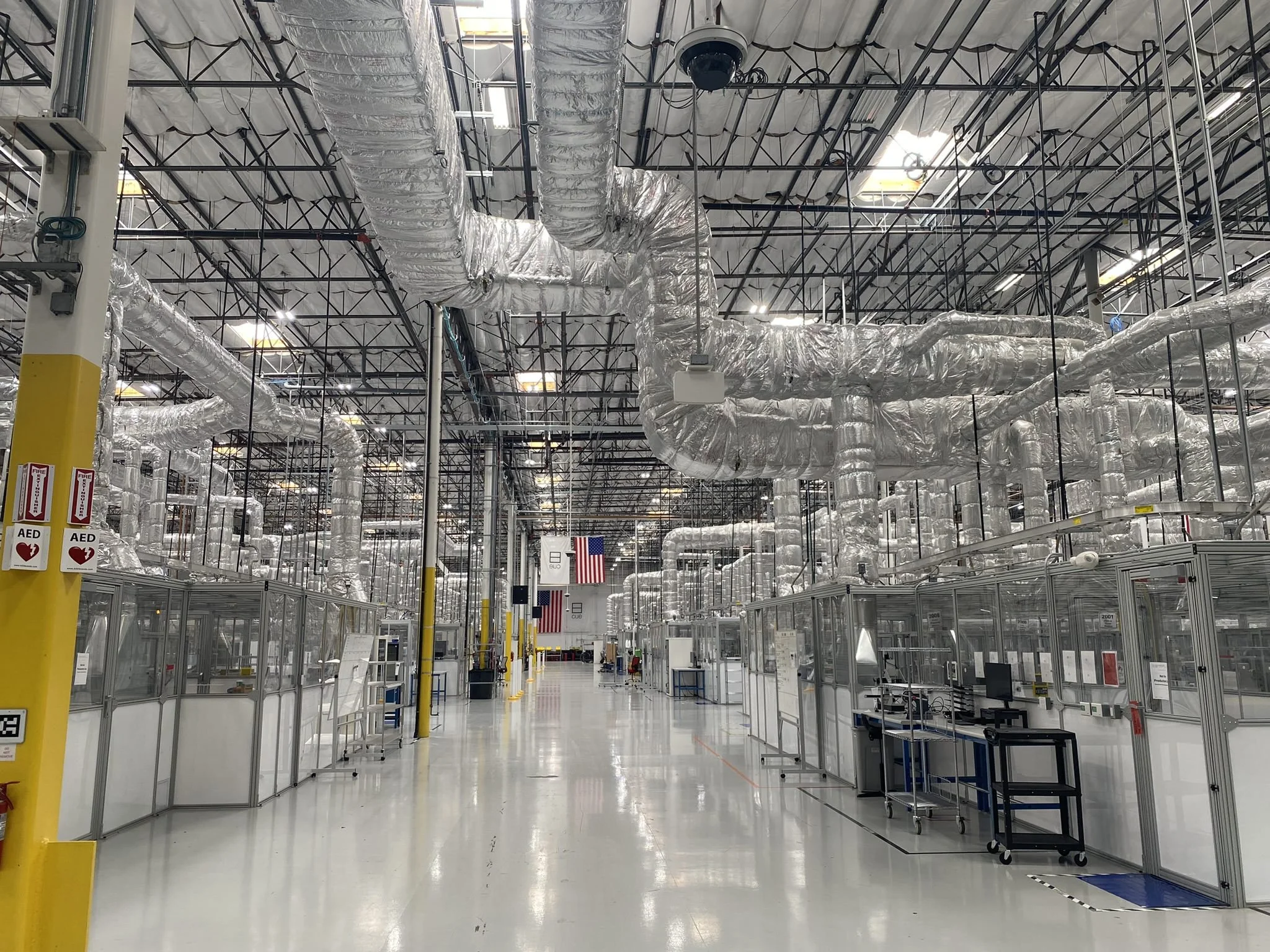
PHOTO COURTESY OF DAVID BARKOFF
Did you like that part of it? Or does it get tiring?
It was fun and glamorous when I was single and didn't have kids and I had friends from college in every single city. And I could boondoggle my way to a Thursday meeting, and then I would spend the weekend in Chicago or New York or Seattle or wherever I was looking at something, and see baseball games and concerts and the world. But it's exhausting, flying somewhere to go look at one thing, to go back on an airplane. Like, “how was Chicago or how was Singapore?” “It was great.” I saw my hotel and I saw the plant, and then I was back the next day. It’s not always this illustrious, flying here to go see this and look at that and meet with these people and then have this great vacation afterwards.
That makes sense. In your role now, what are your main responsibilities?
In our business, no matter what your title is, you wear many hats. And our business is very simple in nature. It's almost too simple. We’ve tried doing all these things to streamline it, to adapt all these things, but, you know, in its truest form, we physically have to see the assets. So whether I go look at them or somebody else goes and looks at them and sends pictures, somebody has to touch them. And then after that, we come up with a value of what's there.
We typically send the client a proposal that's either what we're going to do–what we would buy it for, or what our sales strategy is–and what the timeline looks like. From looking at the assets to sending a proposal and executing a deal, it’s typically a week or two weeks to finalize things. Then from there, we generally have a sale roughly 45 days later. So it's kind of all hands-on deck and talking to our marketing department, our operations department, making sure our guys on site are cataloging and inventorying what they need to, making sure the marketing is touching the right channels. And then we flip a switch and we have an online auction sale just like eBay. Technology has changed so much over the years, everything is online. Now we do about 200 online auction sales annually.
Wow!
I think the last live sale we did was probably [in] 2017. It’s hard to get someone's attention who wants one single item when the catalog has a thousand pieces and the buyer is in Shanghai and the assets are in Texas, and there's a time change and a language barrier. There's all this commotion going on where that person has to pay attention for 90 seconds for that one item they want. We now have everything online over a period of 24, 48 hours where they can bid at their pace, at their time, in their currency. So it makes it really streamlined in that regard.
I was imagining you up there with a gavel in a warehouse...
No, it's changed. It used to be all that. The cost of production of that is very expensive for sending webcasts, people to produce the event and do all those types of things when we no longer need them. And it also limits your audience. Somebody physically either has to be there on that given day at that time, or they have to be logged in online and try and figure out exactly what time that item is going to be up for bid. With the auctioneer calling the bids on that item, it's easy for us to miss that buyer. And so everything really has been converted to an online process.
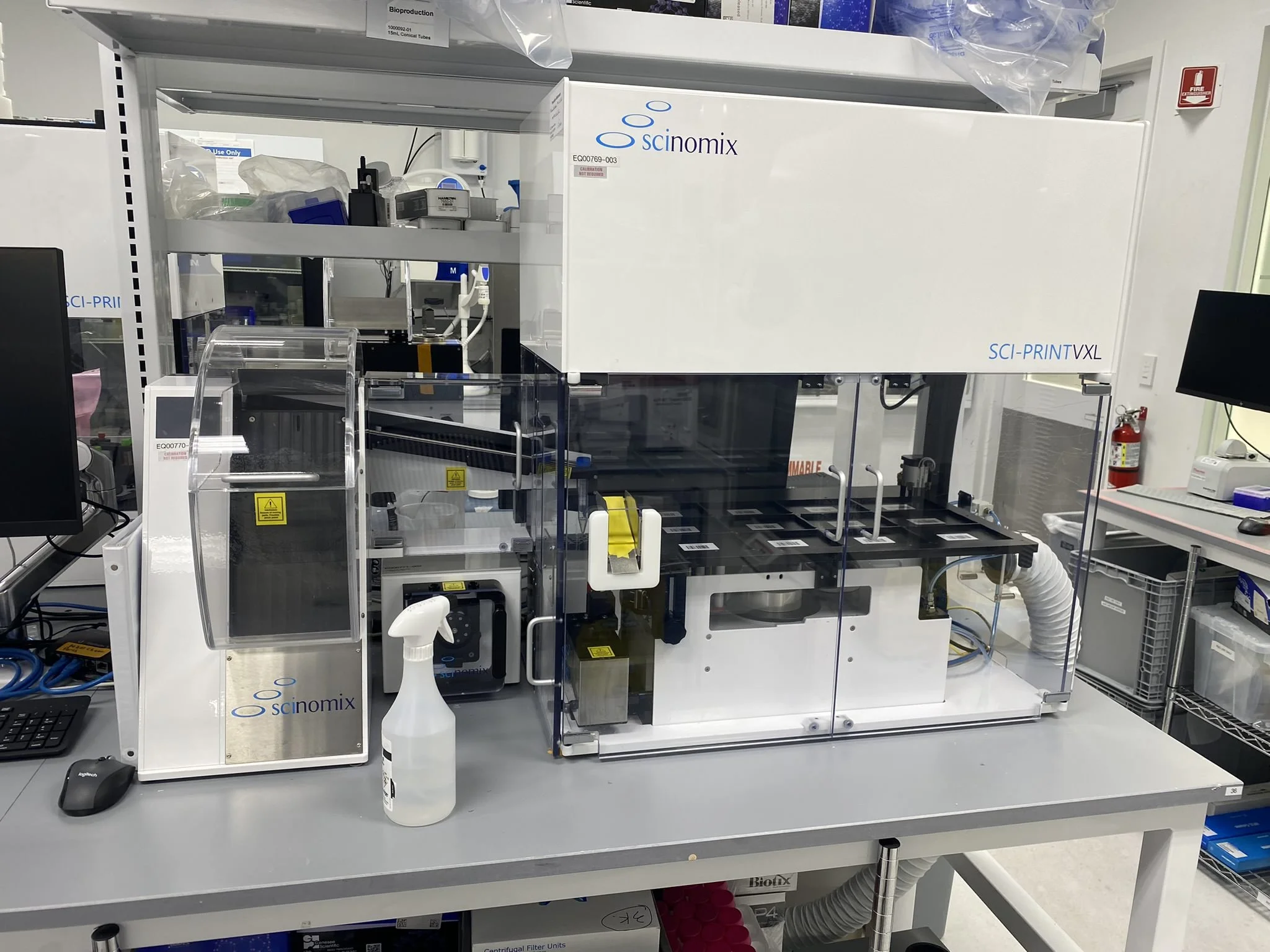
PHOTO COURTESY OF DAVID BARKOFF
How do you know how to value the items?
By looking at this stuff all day long and selling it all day long, you eventually learn what things are worth. We have our core strengths in pharmaceutical, biotech, nutraceutical, chemical processing, food and beverage, and high-tech semiconductor electronics, things like that. And that's just by nature of where our business started in the Bay area. It was the hotbed of semiconductor electronics activity, and then it kind of morphed into pharmaceuticals, and that's led us down that path.
[The products] can be whatever. [If it’s] somebody bottling a beverage, it's the food and beverage space. But a lot of those processes are tied directly to what we see in a chemical processing plant or a pharma plant. Or the QA [Quality Assurance] lab at a Coca-Cola plant is going to have the same inspection and lab equipment as Pfizer would have. So there's a lot of overlap between those two spaces. Not only that, they're going to have a warehouse with forklifts and pallet jacks and all that stuff. A forklift doesn't have to be for just pharmaceuticals, anybody can use a forklift. So we see enough of the same stuff over and over again and then we see a lot of overlaps in our space. It's a lot of repetition, just like anything else. You see the same microscope so many times over so many years, you become the de facto expert on microscopes or whatever the hell it is.
What’s it like working at such a large company?
We still operate like a family business. The principals are part of the family, and just by nature of what we do, it's a very kind of boiler room environment. It's a lot of hustle. It's a lot of, “things need to be done right this second or we're going to miss some window or some opportunity”. As a result, it has a very team-first atmosphere where people don't really get their feelings hurt or don't feel like their toes are being stepped on. It's collaborative, but it's also fast-paced and crazy. And your heart rate and blood pressure can go through the roof at any moment.
Sounds a little stressful, but things like that can be really exciting too.
Fire drills at 9 at night or 6 in the morning or on Saturdays or Sundays…we've seen it all.
What's the worst fire drill you've ever been called about?
I mean, actual fire drills. We did a sale for Rawlings, the people that make sporting equipment. We conducted a sale that ended on a Friday and I got a phone call. Everything had sold, buyers sent invoices, people had started to pay for their items, and the building caught on fire over the weekend and completely burned down.
Oh my god! What did you do, refund everyone?
Yeah, we obviously have a claim because of insurance, but you've done all this work to get to that point, to have the event, and then literally the barn burns down.
I can’t believe that. Who covers the insurance for it?
In that case, they had the assets insured because it was their stuff in their building, so they compensated us. But had we bought the assets or had we owned the building, then we would have filed the claim ourselves.
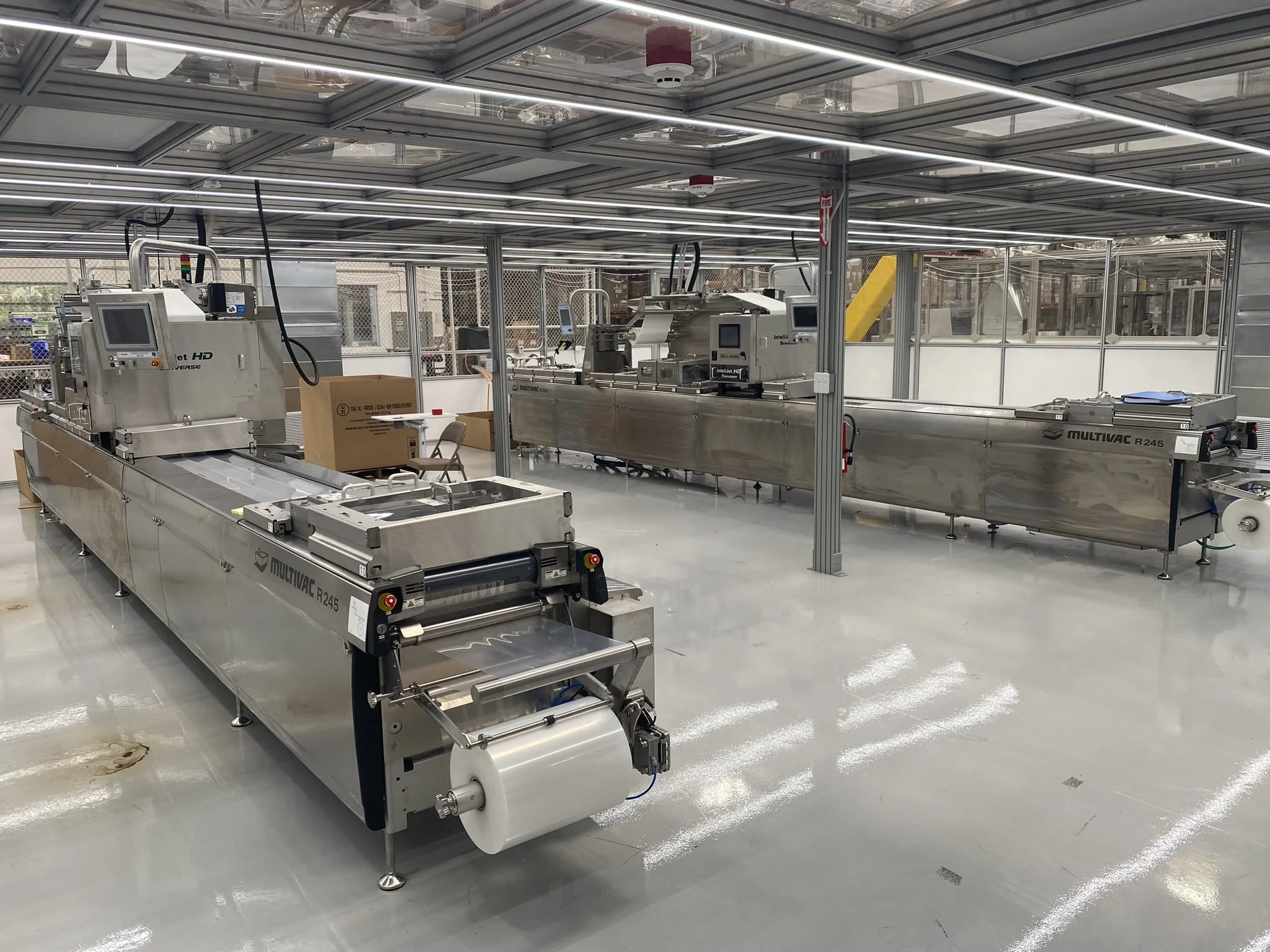
PHOTO COURTESY OF DAVID BARKOFF
That makes sense. What is your favorite and your least favorite part of this job?
My favorite part of the job is the hunt, the chase. Finding the deal, getting into the deal, structuring the deal, putting the whole thing together and getting it signed. And the thing that I hate the most is–not even losing money–[but] upsetting people, disappointing our sellers on occasion. When you give them expectations that you think something is going to happen or the value of something is such and such, and just being wrong. When you do this enough and you claim you're an expert, you want to be an expert. And when things don't go right, it sucks.
What is something that you didn't expect to deal with in this job but you do?
Dealing with so many different people. We have thousands of bidders that we deal with every year and there is always some new challenge or problem that arises and new personality that you're dealing with. I feel like a gate agent at the airport sometimes. The buyers go to our customer service, which is the first line of defense, and then when things get escalated sometimes I'll hear about it or the buyer will call me directly.
There's always some crazy conundrum and personality that you're dealing with, and it’s some of the craziest people out there…they bought something and they thought they were getting something else or they can't get it imported into their country because of some regulation, and they need our help with something. There's always some hurdle that we all have to collaborate [on] and figure out.
What do you do when you can't get something into a certain country?
There’s freight forwarders or logistics and shipping companies that can handle chain of title or specific things like that. It's costly and it can tie things up for sure.
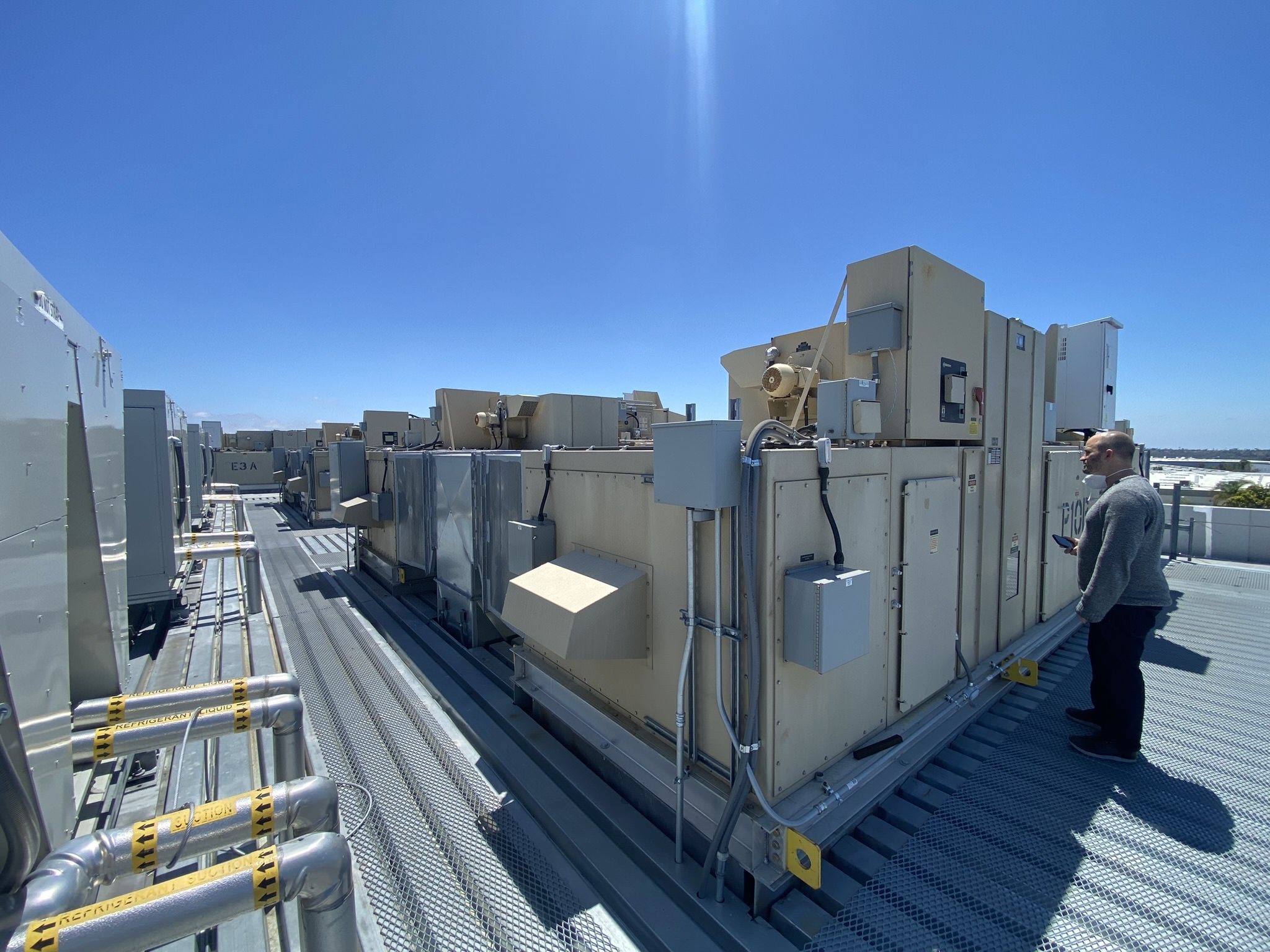
PHOTO COURTESY OF DAVID BARKOFF
What is the career trajectory in this field?
It really depends on what you're doing. There’re three functions in our business. There’s operations, the people that physically go to the site [and] catalog and inventory and tag those assets. If somebody wants to be on the road inventorying things…it's monotonous, it's exhausting, it's grueling. It's long hours in faraway places under time constraints. It's [for] a very specific person. And generally the trajectory is [that] they become the head of operations, overseeing people under them, sending the people to the different sites and choreographing things. There's not a whole lot of upward mobility there, but you become the head of that department.
Marketing [is the] same. We have a marketing person and a Chief Marketing Officer, that's the extent of it. And then, from the sales side of things there’s a president of our company and a CEO and then there’s the sales force underneath. It's not like we have all these managers and territories and different levels, which is a good thing. There's no real pecking order, so there's no real upward mobility, whereas [if] someone's looking for the next promotion…I still do things that I did 15 years ago, and guys who have just started are doing some of the same things that I do today. It's a lot of collaboration, all hands on deck doing the same thing.
Could you share a bit about how salary and income works in this role?
Everybody is different. We have salaried employees in customer service, marketing, and operations, and then on the sales aspect, employees generally get some sort of base salary and then are compensated based on their performance or what they're responsible for generating. So, it’s similar to a real estate agent. The commission is tied to what revenue was generated from that specific project. It’s probably between 10-25% of the total.
What does work life balance look like in this role?
There’s no such thing as 9 to 5, which is good and bad. I can come and go whenever I want. It's all about what projects we have going on and what I need to manage, which is the good thing. The bad thing is having a phone call on a Saturday that the building burned down, or having a phone call from a screaming client on a Friday night that something wasn't done in a certain way. We're on call a lot, but it can be rewarding in that regard as well.
Okay, but what do you do?
Zach, my five-year-old, and I had this conversation. He asked what I do and I told him I'm an auctioneer. I said, [I] buy low, sell high. But we're just solving a problem. We're trying to buy other people's goods [they’re looking to get rid of] and sell them for a profit.