Real Estate Advisor

PHOTO COURTESY OF SARAH STROHSCHEIN
Like many other professional fields, the world of real estate has many more subtleties than we perceive from the outside: different licenses, different designations, different degrees of involvement. To help us navigate all these, we spoke to Sarah Strohschein, a real estate advisor based in Atlanta, GA.
Name: Sarah Strohschein
Occupation: Real Estate Advisor for Engel & Völkers Atlanta
Okay, But What Do You Do?: I lead, guide, and protect my clients in their real estate transactions.
Can you walk me through your career to date?
I pivoted into real estate full-time during COVID. I was furloughed from my career in sports licensed sales. I'd gotten my [real estate] license 3 years prior. My sister is a top agent and broker in Charlotte and I was getting bored with my sales job, so she said, “Go get your license. Worst case scenario, you sell your own condo and you make back [what] you've spent.” After I got furloughed, I pivoted and never looked back.
I joined a top team in Atlanta under the guidance of Zac Pasmanick. He'd been in the business for 40 years. I really wanted to align with a group that had strong market knowledge, experience, and conducted themselves in a professional and ethical way. It gave me the jumpstart that I needed. I gained so much knowledge those first few years. Then, in July of 2023, I decided to go out on my own. I joined a brokerage, Engel & Völkers, that fit my personal brand.
Engel & Völkers has a really elevated marketing approach. They've got a strong international presence, and that really is allowing me to service my seller clients in a more sophisticated way. I'm extremely grateful for my success. To date, I've sold over $45 million in real estate and assisted over 100 clients up until 2024. And then, year-to-date, I've sold over $6 million. I'm celebrating one of my largest sales closing Q4 2023 as a $4.2 million penthouse.
Congratulations! That's incredible. Can you talk more about that pivot?
I spent 15 years working for the Carolina Panthers and the NFL as their director of retail, really. I managed all of their merchandise business, both at the stadium and e-commerce. That was sales in a different aspect. And then I decided to move to Atlanta in 2016.
I wanted a bigger city, and [connected] with the company that I had been buying from [in my previous job]. They knew how I operated and hired me as a sales rep. I was selling sports licensed merchandise to all the pro and college teams in the territory of Georgia and Alabama.
It was such a leap of faith. I make decisions and just go with it. Like moving. I visited with my sister over a 4th of July weekend and when we were driving back, I was like, “I'm moving to Atlanta.” I'm single, I don't have to consider anybody else, so that probably makes it easier, but I do think a lot of my success is because I'm not afraid to take those leaps of faith. I know I'm gonna be successful at whatever I do because I know how hard I work.
I think indecision can make people stumble more than not having skill sets or things like that.
Yes, you said it way better than I did.
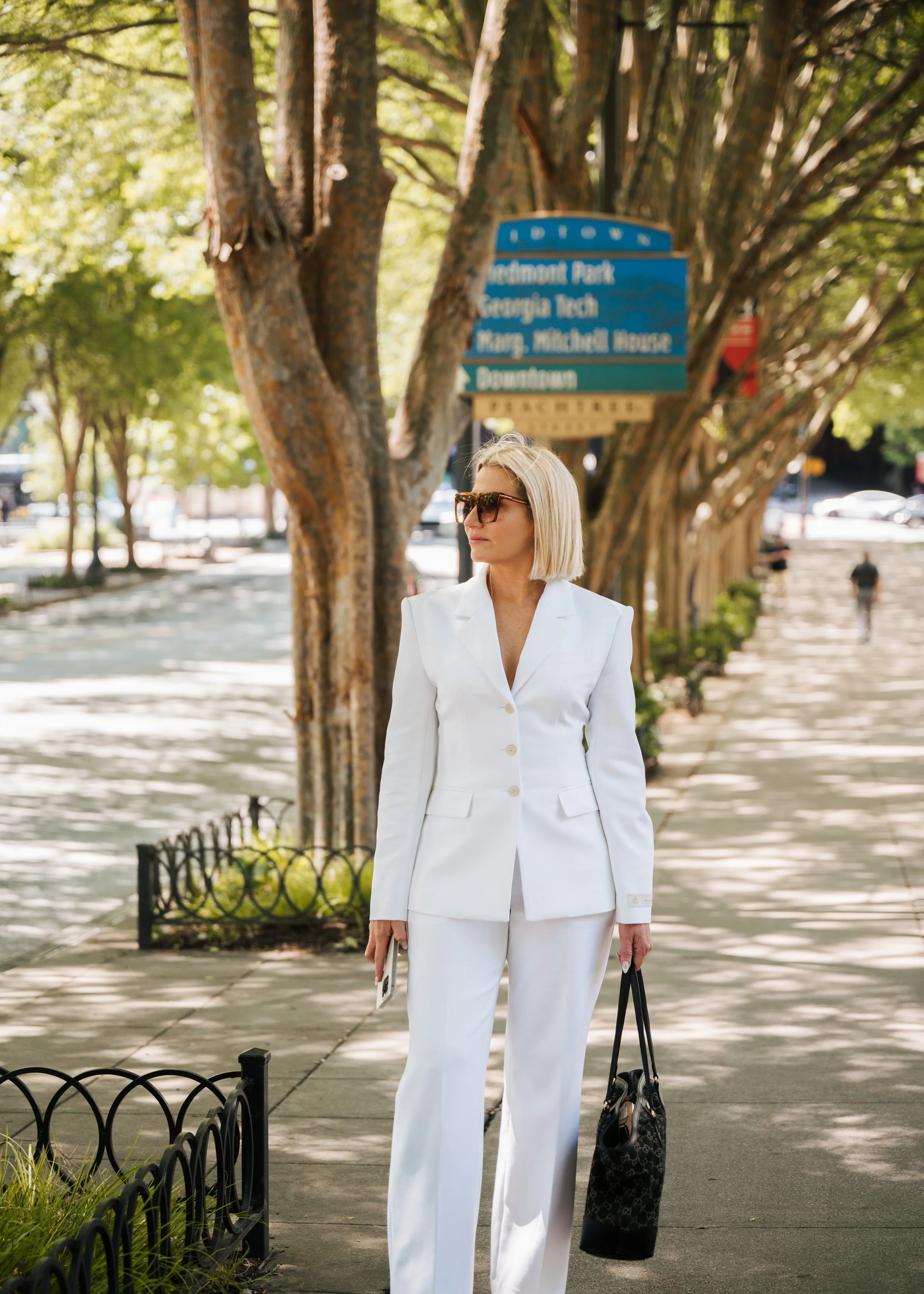
PHOTO COURTESY OF SARAH STROHSCHEIN
So, how did you decide what kind of real estate you wanted to practice?
I'm being elemental in this but, really, there're just two types. There's commercial and there's residential. And I guess there is a third, which is managing, [think] leasing real estate. I didn't even consider commercial. My sister was a residential real estate agent, and so that's the license I worked towards. And Atlanta is, in my opinion, one of the best cities to be selling residential real estate in. We don't have the [weather changes] of the northeast. We have year-round business in Atlanta just due to our climate.
My focus is mainly in town. We have this Interstate-285 perimeter that circles Atlanta. And that's my focus. Even just in town we truly have something for everyone in regards to different property types. We've got mid-rise condos, high-rise condos, townhomes, single-family homes, multi-family homes.
And [we have] the Atlanta Beltline, which is a 22-mile walking and biking trail that is being developed around the town. It connects many of the in-town neighborhoods. It's completely changed the dynamic of real estate. The energy around this walking and biking path is just insane. There are restaurants and shops, and [it connects] really cool neighborhoods. They're still completing it, but that, to me, has really changed the dynamic of real estate in town.
For people who are trying to decide what kind of real estate to pursue, what are some things to keep in mind?
It's really important to [work] with somebody that knows what they're doing. Getting your real estate license and practicing real estate are two completely different things. Had I not [had] this team to tell me how to practice in a professional and ethical way, [I’d just be] out there. Knowledge of the contract and getting that guidance out the gate is so important to become a real estate professional.
Outside of that, I do think having a professional background definitely helps. Unfortunately, I think people think real estate is super easy. We've got shows like Selling Sunset, and it looks like I'm running around in stilettos all day. The literal grind of real estate is not glamorous. I was joking with one of my colleagues yesterday–it's 98 degrees outside and I'm trying to shove directional signs (you know, “home for sale” directional signs) into concrete and dirt.
My advice is: connect with a professional that knows what they’re doing. Yes, you're going to probably give them a lot of the money that you're earning, but it's like continued education for you to become a strong agent. When I left the team I was on, I had so many transactions under my belt I just knew I was ready to become my own agent.
Can you touch on what the real estate license process is like?
I remember I took it in person, and it was, like, 8am to 5pm. I don't remember how long it [lasted]. There were two segments I had to take. And then you show up for the test. But after you get your license, there's all these required continued education classes that you have to take, especially those first couple years. And you do have to hang your license with a brokerage.
The other thing about this industry is that it’s very “pay to play.” Going back to these tv shows making this industry look easy—the amount of money that I spend on just keeping my license active, the brokerage fees, the fees for continued education…
It sounds like you learn so much on the job–does it make a difference to have experience from another career before-hand?
I do feel like my success is due to my previous experience. I have a degree in marketing and my background demanded the same skill set. Having a strong background in sales or some type of career where you've got to be very detail oriented, motivated, and disciplined is beneficial. But it's not to say that somebody right out of high school couldn't be successful either.
Can you give us an idea of what the various inner workings of real estate are? Selling, buying, how listings come about?
This landscape is really different for every single company and real estate agent. When I first got into the business, my team invested in a lot of lead generation. I was basically selling to and assisting strangers. I was fairly new to Atlanta at that time and I didn't have a big sphere of influence, which is very important in real estate. Your friends, your family, your neighbors.
So many of those strangers I assisted my first few years have become repeat clients. I now have a larger sphere. I've got a pretty strong social media presence. I'm finishing my fourth year in the business. I do still personally invest in some lead generation because I'm really good at converting cold leads. I have seen it benefit my business.
In regards to buyers and sellers, it's a completely different cadence, timeline, and strategy for both of those. You get buyers and sellers the same way, but how I manage them is completely different.
You said you invest in lead generation. What do you mean by investing?
Investing in lead generation is basically [paying] a monthly fee for me to have Realtor.com, or Zillow, or whatever the company is, send me leads via email. There are a bunch of real estate agents behind the scenes that have partnered and paid Realtor.com to have access to leads. When [people] hit that “I’m interested in this property” button, I reach out to them to set an appointment to show them the property. At that point, it's like a job interview. You're a stranger, and I need to convince you to work with me. That's my livelihood.
Typically [people] think they're going to be connected with the seller's agent. But in real estate, the seller's agent represents the seller. If you're interested in a property, you want to be working with a buyer's agent.
I hope your interview reveals the more human side of real estate, which often gets ignored.
It literally gives me goosebumps when I have a past client reach out to me [to refer me]. It’s the biggest honor–I have provided such great service to you that you're confident enough to refer me to your friends and family. There's nothing that makes me happier.
I truly feel like I'm living my purpose. I don't think everybody gets to experience that. I don't know if I'll ever get burnt out because it is a grind, but I can say right now [that] I wake up super excited every day to do something that I love.
Can you explain the difference between a realtor and a broker, if there is one?
A real estate agent has a real estate license. A broker has a broker license. You can apply to be a broker, I want to say after five years of being a real estate agent. Then you take further licensing classes to become a broker. A broker can sit at a real estate agency office, and they're the ones that guide me if I have questions about a contract or in general. They become kind of like the leader for all us little real estate agents. There is a difference between a real estate agent and a realtor. A lot of people say “You're a realtor,” but [to be] a realtor you take further education and you're held to a different set of standards by The National Association of Realtors.
Do they handle different kinds of listings?
It’s just a designation. Just because you're a real estate agent doesn't mean you’re a realtor.
What's it like working with people in sales?
You really have to learn how to handle different personality types and be a chameleon. I think I'm pretty good at that. I try to advise my clients with my experience and market data, but at the end of the day, it's their decision. It's their money.
For example, I give my clients a very detailed strategy to prep their home and maximize their net and sell their home quickly. But it's their choice to follow my strategy. I know that I'm doing my best in advising, but at the end of the day, I can't take on my clients’ decisions.
There's a lot of “uncontrollables.” You'll invest six months with someone, showing them properties, and then all of a sudden it's “We've changed our mind. We're just going to keep renting.” You don't know how your clients are going to react. Sometimes it works out great and you get to the closing table, and sometimes you don't.
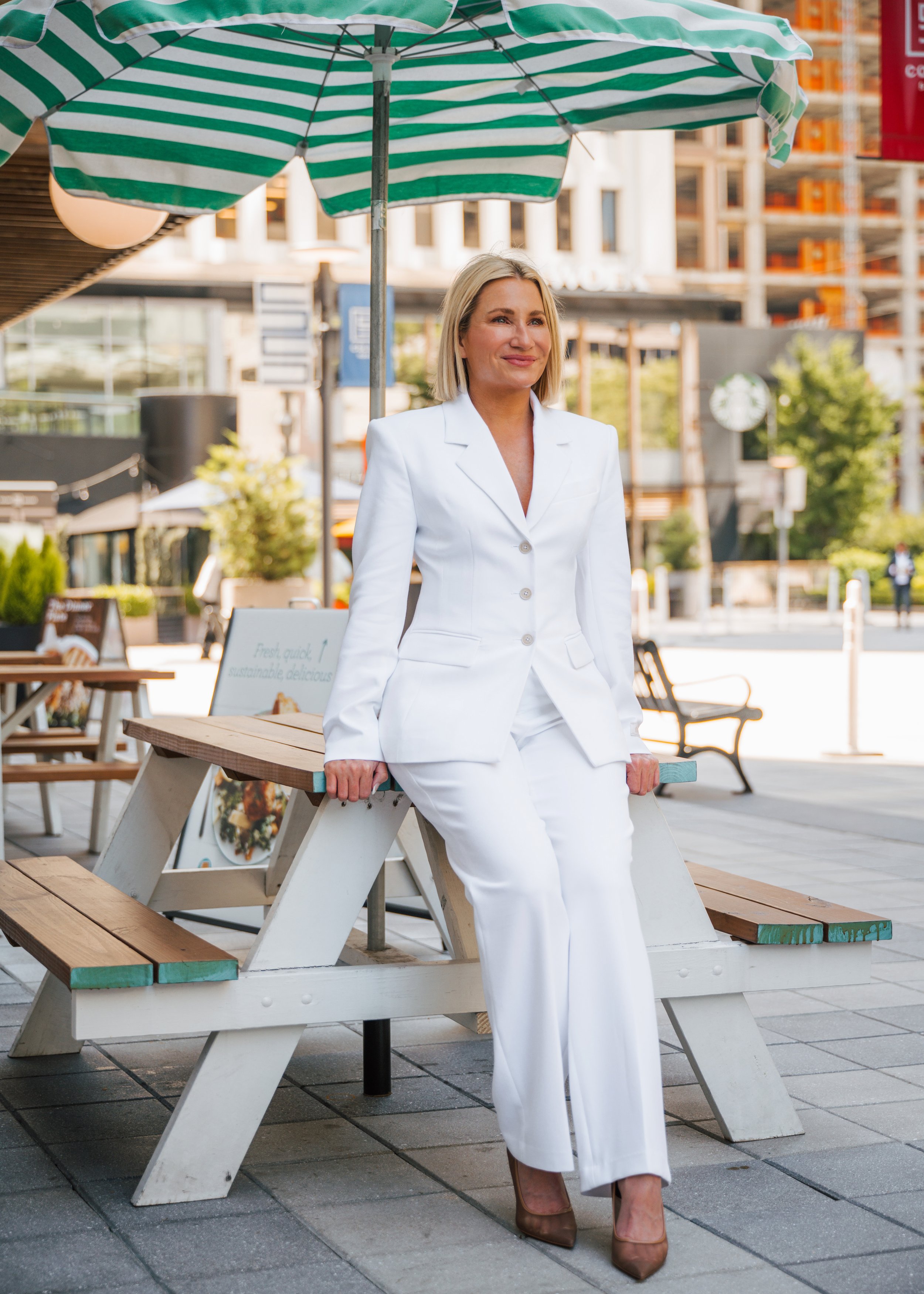
PHOTO COURTESY OF SARAH STROHSCHEIN
Most favorite and least favorite part of your job?
I love the competitiveness of it and that I can control how I approach the business. You're an entrepreneur. There's no one telling you–outside of the laws of Georgia real estate–how you have to run your business. I really enjoy that. I do feel like this is the first industry that I've been in where my input equals my output just from a financial [standpoint.] In a lot of other careers, I was salaried and [I’d] get these little bonuses. On the flip side, salaries had a lot more stability.
In this industry, every day you've got to wake up and hunt. You have to be disciplined because no one's coming to you with a paycheck every two weeks. But I thrive off of that. There's a lot of unknowns, so it can be stressful. Being a single person, I don't have a partner to rely on. My bills are my bills. My money is my money. It can be uneasy at times. Right now the market is a little slower, and you just get this uneasy feeling, like, “When's the next deal gonna come?” But I've also learned, even in the short four years I've been in the business: “The next deal is gonna come, Sarah. You're gonna be fine.”
Can you share how the payment process works? Is there a fixed cut? Or does it vary?
There is no standard. I can speak to my business: I'm a full service agent, and I charge fees based on my level of service. Basically, I charge a percentage of the sales price, which currently is about 3% if you're buying a home or 3% if you're selling a home. If I'm assisting you with both the buy and the sale, we'll talk about a different fee structure.
But again, all of that money does not go into my pocket. I have to pay my broker a percentage. How brokerages charge their fees [really ranges]. Some charge flat fees, some charge based on the amount of business you do year-over-year. I'm paying the Georgia MLS (Multiple Listing Service) fees associated with the transaction, and then all the monthly fees we pay to be real estate agents, realtors, continued education…I try not to even look at the line items because what my hourly rate truly is would probably be pretty depressing.
Once you're in the real estate world, where can you go?
Ultimately it depends on what you want to do. I do feel like in this industry, I am challenged every single day. I'm learning something new every single day. Our contracts change every year. In other careers, if you just stayed in one position you wouldn't be this challenged.
After five years, you can become a broker and oversee other agents. You could be a team leader, like the team I was on. There's not a standard. I would say being a team leader and then becoming a broker are the two typical next steps, if you want to do that. But there's a lot of agents that remain single agents and grow their business.
How else does a realtor fill their time when they're not showing a house?
There is so much behind the scenes work outside of showing homes. Showing homes is the easiest part—put on a nice outfit and go tour beautiful homes. My time is consumed, really, by the buyer and seller consultations that I have. The amount of paperwork and follow up once you get a property under contract is really insane. There's inspections for clients, timelines and prep work to get a listing up and running, creating and proofing all of our marketing materials that go out. There is a lot of paper-pushing to be in compliance with Georgia real estate law and continued education. It's a lot more administrative work than I think people understand.
I'm super type A, and it's hard for me to let things go, but I did just hire a transaction coordinator to assist with a lot of this paperwork. It's been the best decision of my life. It has taken so much off my plate. I knew I needed to let go. That is not what I should be spending time on.
I'm hoping it’ll allow me not only to have a little bit more work-life balance, but also spend more time generating business and not just being behind my computer.
Okay, but what do you do?
I lead, guide, and protect my clients in their real estate transactions.