Chef and Bakery Owner
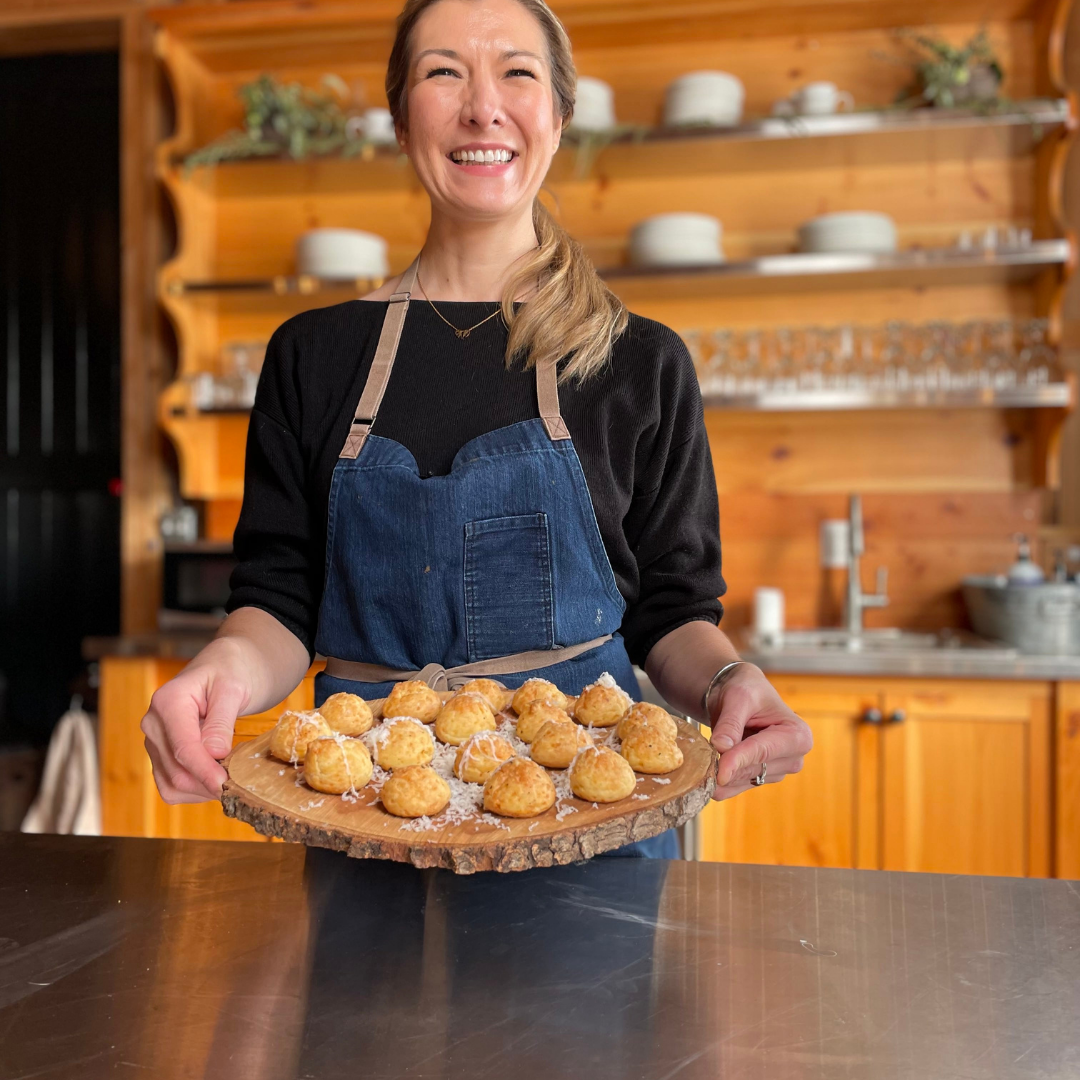
Photo courtesy of Monica Glass
Have you ever daydreamed about opening a bakery? You aren’t alone! But what does it really take to make it happen? We spoke with Monica Glass, chef and bakery owner in Boston, about her journey to running this business and what her life looks like now that she is.
Name: Monica Glass
Occupation: Chef, Bakery Owner, and Founder of WLDFLR Gluten-Free.
Okay, But What Do You Do?: I make food so everybody can eat well and deliciously.
What is your official job title?
Chef and Owner of Verveine Cafe and Bakery and Founder of WLDFLR Gluten-Free.
Can you walk me through your career to date?
I originally went to Penn State University for what I thought would be a career in film and video and ended up switching to communications – along the same realm, but more writing instead of video. I graduated with a degree in Public Relations and moved to New York City, where I lived and worked at a couple different PR firms before realizing my true calling, which was in the kitchen. In New York, I worked at Dan Klores Communications doing children's entertainment. But I kept gravitating towards the food side: the restaurants, the hospitality, the nightlife, and the chefs that we represented, and kept asking to volunteer on those kinds of events and meet the chefs. And I eventually met Maureen Petrosky.
We were promoting her brand new wine cookbook, [and] she took me under her wing. I really admired her career path and [she became my] mentor. She said that if I wanted to get into the industry, since I had no money, I couldn't go to culinary school. But she suggested that I go ask a restaurant if I could work for free to learn. So that is what I did and I ended up at Gotham Bar and Grill under Deborah Racicot. I chose her because I really liked her style – granted, I hadn't eaten [there], I had no money–but I loved everything that I had read [in] interviews about her. She liked to say we eat with our eyes first, so everything does have to be visually appealing, but at the end of the day, what they're going to remember is, did it taste good? [I] always held that near and dear to my heart. I worked with her for a couple of years and for a good six to nine months for free. She offered me [a job] three times, and it wasn't until the third one that I was ready to accept it. I wasn't ready to go from making, like, no money [working in PR] to really no money [working in kitchens] in New York City. But I decided that if I didn't take it, that I probably shouldn't come back [to Gotham]. And I really wanted to come back. So, I started working with her full time at Gotham Bar and Grill and working part time in public relations.
I switched to a more food-based public relations firm called Melanie Young PR. A couple years from there, I ended up getting a stage [unpaid internship in a professional kitchen] with Michael Laiskonis. I am one of those people who, if I see something I like, I want to learn from you, and I will reach out to you: I will follow your career, your blogs, your everything, and then find a way to either go meet you at your restaurant or write you a nice email and see if I can work with you and learn from you. That's what I did a lot during my career and Michael Laiskonis at Le Bernardin was one of them. He had me come in and I didn't realize that he was hiring. I just thought I was going to see the kitchen, meet him, see what they do there and get some experience, [but] then he offered me the job on the spot.
I moved from Gotham to Le Bernardin, and from there I stuck with the Le Bernardin family for a few years. [Then] they moved me down to Philly to open up 10 Arts by Eric Ripert with my good friend Jen Carroll. I was there for about four or five years and then moved to Boston, where I worked with Ken Oringer, my now business partner, at Clio and Uni at the Elliott Hotel. And then I went back home after three years because I wasn't going to work for anyone else in Boston and I had a good opportunity in Philly. I went there, worked for Spraga briefly, and then Constellation Culinary Group for four years. [But] ever since I left Clio, Ken and I have been talking about doing something together and the timing was finally right [with Verveine].
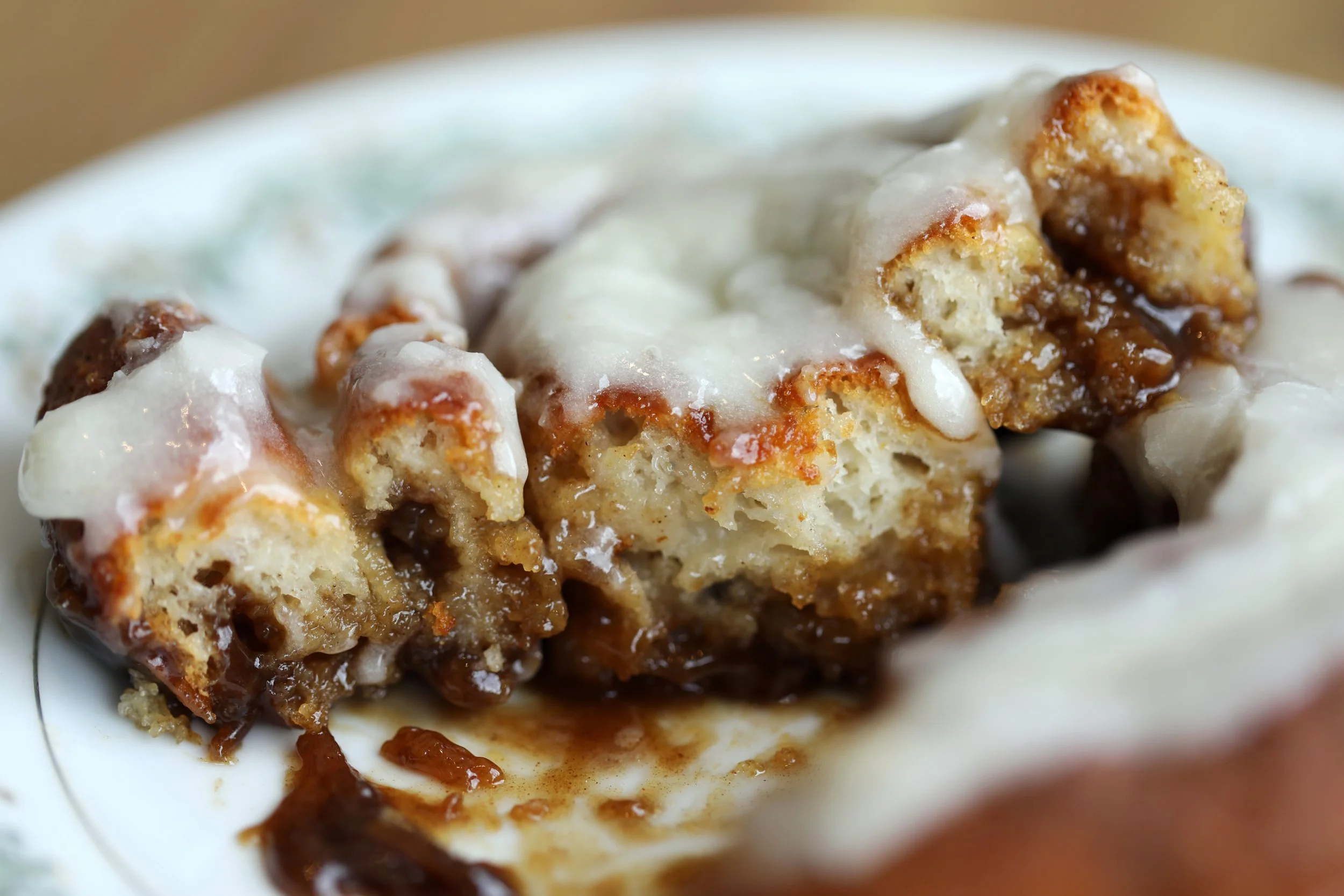
Photo courtesy of Monica Glass
What types of training do you feel are most helpful to become a chef restaurant owner? And is there any difference for a chef vs a pastry chef?
Chef vs pastry chef, they definitely have different skill lines but they can cross over very well. In my opinion, pastry chefs tend to be better at cooking than chefs are at pastry, just because the ranges are a little different. In my instance, I wanted to get into pastry because it was very scientific, and I felt like it could be more creative as well. I like to know the reasons why I'm doing things, and I thought that was more pastry than cooking. It's not, like, totally true. There's definitely reasons why you do things in cooking too, but that's why I chose pastry. Something that I struggled with my entire career is that I don't believe that pastry chefs get the same clout or respect that a chef does when actually, doing pastry is a far more scientific laborsome, craft. You really have to know what you're doing, and you can't fix things as easily [as] a chef. Not saying either is easier than the other, but they are different in that regard.
As far as training, really just getting into the trenches and doing it. I think you learn the best on the job and you're under fire and have to make quick decisions. Culinary school is always a good choice. It wasn't the right route for me, but if you can afford it, you'll learn a lot, training-wise. Other than that, continually reading and trying to keep up with what's going on and learning new things.
What does a typical day look like for you?
Now that I'm about four, almost five months into the cafe, I'm not coming in quite as early unless one of my staff is not available. I can come in between 6 and 7 now, so that's a blessing. I sleep in a little bit, get in there, check everything, make sure that what [the staff is] making in the morning is up to quality, which it typically is. Then I jump in and fill in as needed, wherever. It could be bread, pastry, on the line, prepping things for them, making the sandwiches.
And then working on different admin for the business [and] trying to figure out new avenues for us. Like, whether we can do online ordering and coming up with new menu items. Those take time to plan and execute and test and keep tweaking if needed. A lot of teaching because a lot of my staff, while they're great, are new to this, especially to gluten-free cooking and baking. Explaining why I do things the way that I do and making sure that they really understand is an important part of the role. What else…? Do the ordering, do inventory, answer emails. I don't do the social media, but I like to check [it]. Cleaning, I clean a lot of toilets and change toilet paper and clean the floors as needed. Re-organizing the walk-ins – I want it to look very organized and it drives me crazy when it's not. Then depending upon the evening, I've been thankfully able to come home a little earlier now. So I usually leave around 7 or 8pm. It's a long day.
I feel like it can't get boring because all those tasks are different every day.
Yeah. There's never a boring day, which I'm grateful for. And one thing that I love being able to do now is [to] speak with the guests and interact with them because I have a semi-open kitchen. The reason why I cook is I really love to work with my hands [and] I love to make people happy. Years of me doing this in the background or in basements, I never got that satisfaction from the job. It's a really cool thing now.
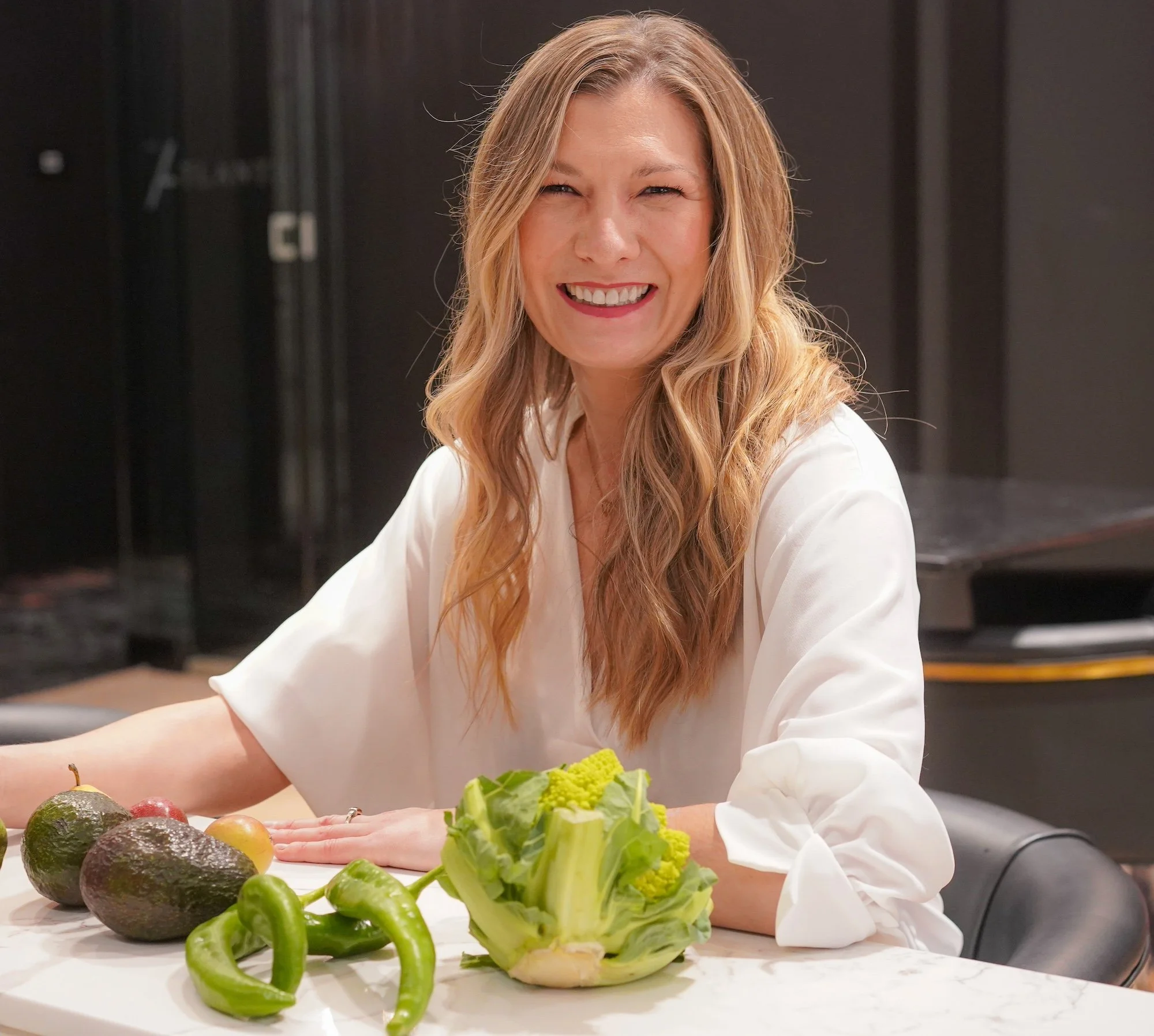
Photo courtesy of Monica Glass
For someone who’s never worked in a kitchen before, what are all the different roles?
If you've never worked in a kitchen before, do what I did and ask to speak with the chef and explain why you really like what they're doing and why you want to learn from them. And then maybe you'll get lucky and they'll take you off the street and you'll get to start right in the cooking. But oftentimes that's not the case.
My advice is not to think anything less of a dishwasher job, because the dishwasher, in my opinion, is probably the most important person in the kitchen. If the dishes don't get done, nothing happens. And also they get to see everything. And, at least in my kitchen, I like them to learn and taste and do everything that the cooks do as well. And hopefully, they'll move up and along the lines.
Every restaurant is different for the structure, but [in mine] they probably move to cold prep, cutting, learning knife skills. Cutting vegetables, fruits, meats later on, but produce [to start]. Then they'll slowly get to help (maybe on the line) and build some salads or sandwiches during the prep. I have one dishwasher who's interested in pastry. He's learning how to shape the bread so he can help do that when he has time and learn from there. Then maybe we'll get him to mix a few things.
In a larger kitchen there’s the cold line, the garde, and then they would move up to the hot line, or maybe the hors d'oeuvres [and] the cooked orders or sauces as well. But [at Verveine] it would be cold prep and then helping around the line. I don't have an actual position title for it, but basically [they’d] assist on the line as needed. Then I have my head people on the line, and in pastry, I have a bread team and a pastry team. They do mingle a little bit because I want to cross-train everybody.
Your restaurant is all gluten-free. What are the joys and challenges, if there are any, in making that a mainstay of this restaurant?
I was diagnosed with celiac disease about 16 years ago now. And back then it was a big challenge eating out with friends, doing social activities where food was involved. I was the only one I knew at the time with this issue, and restaurants were definitely not as accommodating. It was hard to find good food. I felt a little isolated because I couldn't go out and dine with friends easily. I couldn't just have the same meal that everybody was having. That became one of my guiding principles, really trying to create a space where everybody could dine together safely – and no one would know it's gluten-free. I really worked hard trying to figure out different recipes that don't taste gluten-free. I don't want that stigma.
That's such a wonderful thing to have created, to get to offer to others.
Yeah. I have a lot of people say that. A lot of non gluten-free people enjoy the food too, not even [realizing it’s] gluten-free, which is the goal that I've always had. It really fills my heart up.
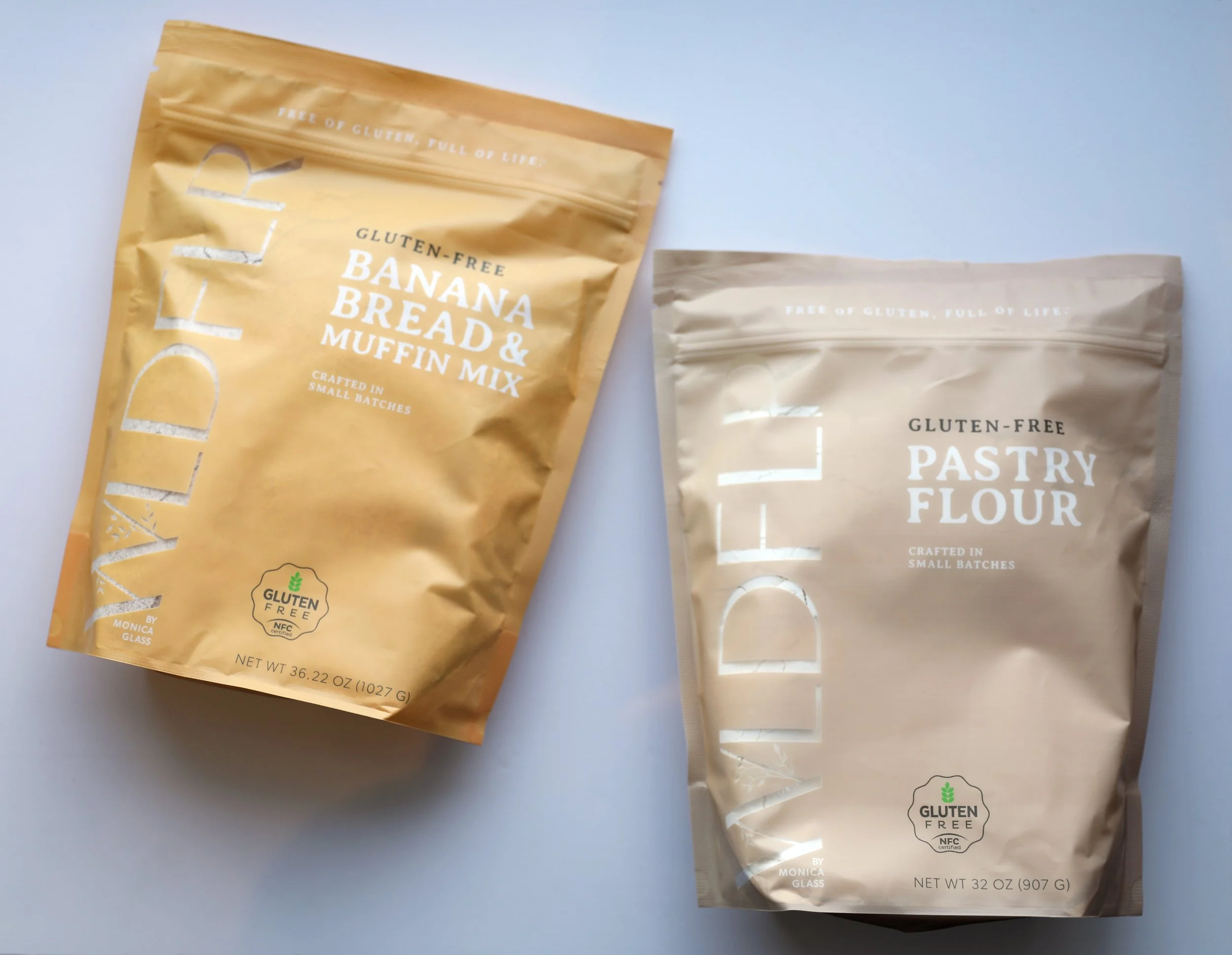
Photo courtesy of Monica Glass
Is the secret to gluten-free baked goods that don't taste gluten free your WLDFLR flour?
Yes. I don't use the blend in everything, but it’s in a lot of my things. That was, or is, probably one of my biggest challenges, because I didn't like all the flours that were out there. Coming up with my own blend that could create food that didn't taste gluten-free is basically the secret sauce.
What was the process like to develop that product?
Years and years of tinkering with different blends, changing some things, learning different properties of the different ingredients and seeing how everything works together. I'd say my first iteration of this blend probably started when I was working at Clio. Maybe even before that. Maybe [at] 10 Arts. As I learn more, I [now] understand why I'm putting things together. The final iteration I probably solidified about five years ago. Since then I’ve just been testing it, and it seems to be tried and true for most things. Not everything, but for most things.
And then I started trying to figure out, “Okay, how can I make it accessible for other people to purchase?” I started mixing it, bagging it myself, selling it on my website [and] a market as well. People seem to really like it. When I was starting this cafe, there was no way that I could mix as much flour as we’d probably need. So I researched different manufacturers and got some recommendations from people and found Raymond Hadley, who now I have do the blending for me. They package it and deliver it [too]. I bring 50 pound bags to the cafe and I got 2 pound retail bags for people. I updated my branding and packaging for those with the help of a designer and got those produced as well.
What is your favorite part of the job?
Two things. The first is when “it” clicks with my staff and they really understand it and I can see them growing and learning and really enjoying it. The second thing is the guests. I didn't get to interact with guests for so long and I love it because they're the reason why I do this.
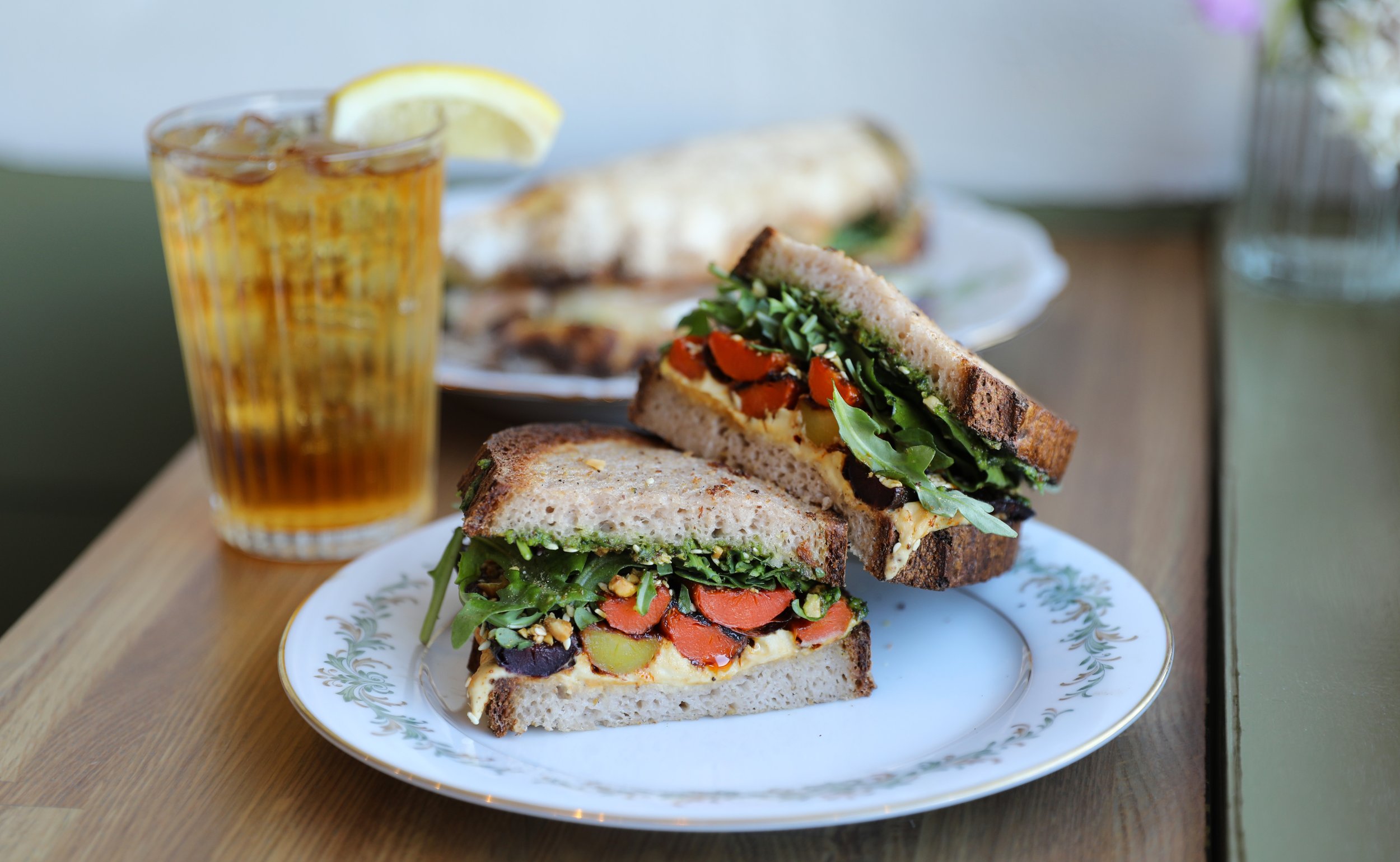
Photo courtesy of Monica Glass
What's the most challenging part of your job or your least favorite?
When the staff doesn't get it and they have to do things over and over again. I hate food waste. I hate any waste. Then I have to come up with creative ideas to salvage something if we can. And I feel like I am pounding my head against the sidewalk if I have to say things multiple times over and over again.
Okay, but what do you do? Please answer as if you’re explaining to your ten-year-old self.
I make food so everybody can eat well and deliciously.