Company Founder
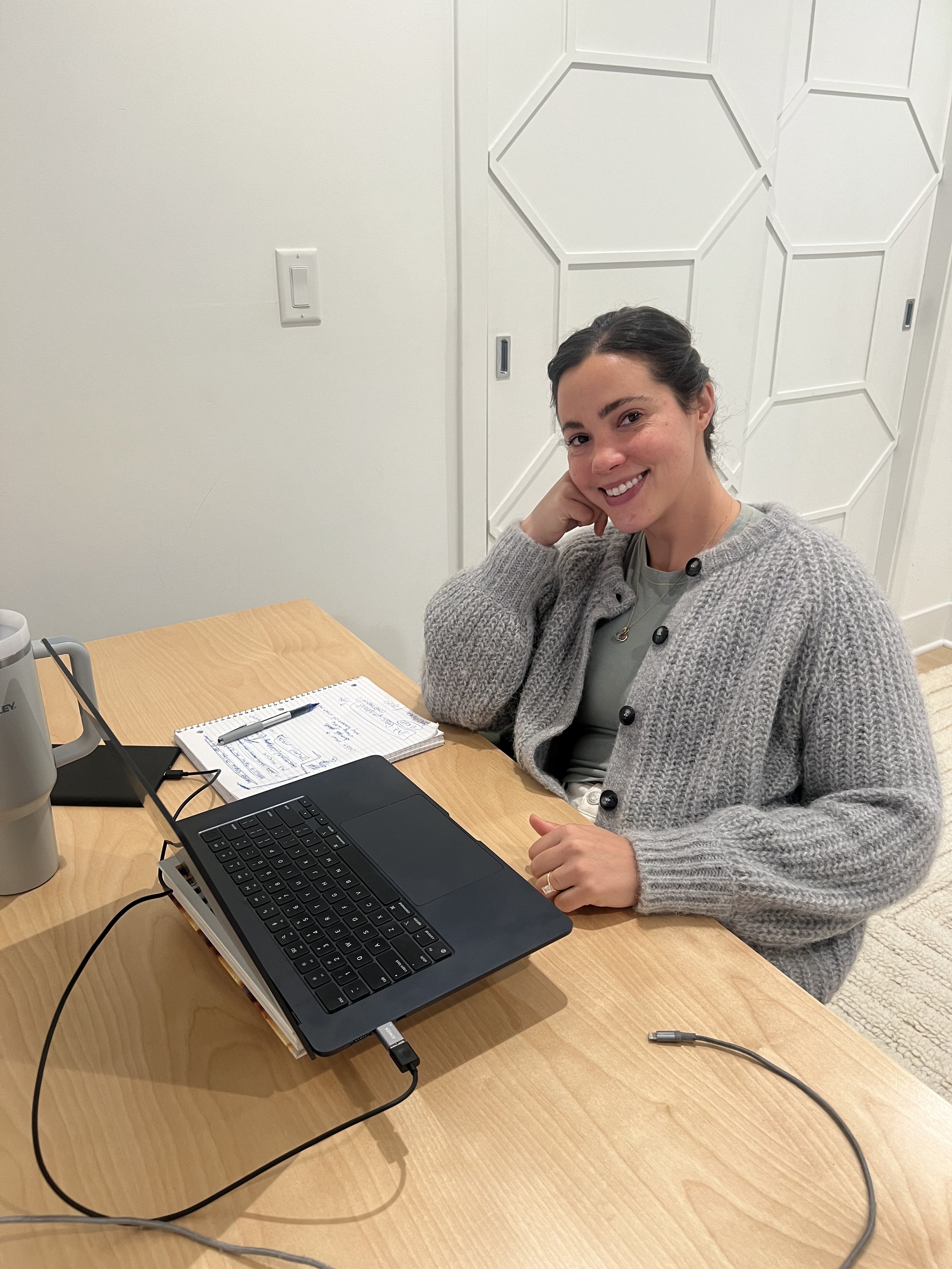
Photo Courtesy of Lucy Dana
Lucy Dana is the co-founder of One Trick Pony, a company that specializes in peanut butter but is expanding its' product line. She sat down and talked to us about optimizing your skillset, refining your marketing strategy, and to not overlook any detail that seems obvious to you.
Name: Lucy Dana
Occupation: Company Founder
Okay, But What Do You Do?: I make peanut butter and I sell it so that you can buy it and eat it.
What is your official job title?
Co-Founder and CEO of One Trick Pony.
Can you tell me the path of your career so far?
It's definitely not linear. That would be one of my biggest takeaways for people–where you are now is not where you have to end up. You're collecting experience along the way. I always knew that I loved and wanted to do something in food. In college, I started a food magazine at Duke called the Bite, and then I temped at William Sonoma's corporate offices right out of college in San Francisco. But then I got swept up in the tech allure, living in San Francisco. So, I ended up working at Uber for five years. That was my first real, quote unquote, job. And while I was there, I had various operational roles.
I was on the Community Operations Team, then I was on the City Operations Team, and lastly, I was on the Mapping Operations Team. There [was] a lot of data driven work, running experiments and the day-to-day of the city marketplace. But while I was there it was during the “Delete Uber” movement. I didn't see my career in mapping operations. I was ready to get back to the food thing that I loved. From there, I went to Blue Bottle Coffee. I thought that was a good way to straddle tech and food. If I didn't like it, I could always jump back.
I started as a Product Manager on our digital team. That was the tech part of it. But I did the back-end data setup for Blue Bottle. Then I ran [their] e-commerce website for a little bit. And the last two years there, I was the Chief of Staff to [their] CEO. That was the best front-seat view to how to run a company without actually having to run a company. You got to go to all the board meetings and knew what was inside the CEO's head, but you didn't have the actual stress of doing it.
Were you looking for jobs and went straight to Blue Bottle from Uber?
This is actually a funny story. I was looking for jobs while I was at Uber. My brother owns a bagel deli in DC, “Call Your Mother.” So he was opening that, and I was in final-round interviews for a bunch of places. I felt confident I would get something, so I quit Uber and went home for three weeks to help him open the bagel deli. I thought it would be a once-in-a-lifetime, cool opportunity. A bunch of people say,”Don't quit your job until you have the next thing lined up.” I'm kind of like, “If you are in a financial spot where you're okay to wait a few months, then why not take a break?”
[But] then I actually worked. I took a job at a weed company in Sacramento. I only lasted two weeks. It was not the fit for me. I don't put that on a resumé… But that was actually what happened in between Uber and Blue Bottle. I turned down my Blue Bottle offer, went to the weed company, hated it, quit, and then called Blue Bottle back and was like, “Hey, can I have my job?” And they so graciously said yes.
What skills did you accrue over time through all these different jobs that you found most helpful in founding your company? Do you think there are things you learn exclusively by being in a job, or can you learn and get accreditations elsewhere?
Right now, I'm a one-woman show, so I'm not just a founder. If you're going to be a general manager or a product manager or anything where you're overseeing either a product or a program or a business, you kind of have to do a little bit of everything. I took skills from every single previous job I've had. In the moment you're like, “Why am I answering customer support emails? I never want to do this again.” And here you are with your own company and of course you're gonna have to answer customer support emails.
All the jobs that I've had–even the ones where it wasn't completely obvious in the moment–there have been skills I've taken from it. At Uber, I was on the Community Operations Team, which was basically customer support. It was super helpful to know that most of the responses were canned responses that you edit a little bit. Now I have some canned responses that I use for my own emails. Or when I was on the City Operations Team at Uber, we ran all of the email marketing ourselves. It was really helpful to learn how to segment who you're sending emails to, learn about A/B testing, testing subject lines, and that kind of thing.
At Blue Bottle, when I ran the e-commerce website, I was like, “I'll never need to know this again.” Now, here I am, running an e-commerce website. Everything you can collect [for] your tool belt is helpful if you do want to be in a generalist role like this.
The majority of it you learn on the job. But [there are] some building blocks that help you learn or help you feel equipped to do certain tasks. I'm a big believer in knowing your way around Google Sheets or Excel. That was really intimidating to me early on at Uber. I felt like all the people who were excelling could pull their own data and tell their stories with data really well. So, I took a General Assembly class. It was, like, 3 hours total, but it gave you a crash course in the basics. I would recommend that for anyone who wants to be in any operational or finance or generalist role.
The other thing that I think is super helpful is to understand statistics. At Uber, everything was A/B tested. Now, a bunch of the software will kind of do it for you. But I still think it's important to understand what's going on under the hood; learning what a “p-value” is and all of that. You could go on YouTube and find a class for an hour. I think [it’s] really helpful to have that kind of foundational learning.
If you know it, then you don't have to think about it, and you can focus on other parts of your job.
Exactly. And it won't take you 3 hours to manipulate data. So, definitely a time saver, too.
What's something you didn't expect you'd have to do that actually is part of your job?
Manual labor. There's so much manual labor that I didn't think of. I made an Instagram the other day that was a joke, but it's kind of real. You quit your job to become the boss, and then you're doing tasks that are intern-level tasks. Cause there's no one else to do it. I ship all of our swag orders myself. That means packing boxes, walking to UPS. Anytime I do a farmer's market or a holiday market or something, you have to set up the tent and drag all the stuff...And I live in an apartment building, [so] three flights of stairs…It's a lot of manual labor. But I guess it keeps you healthy. So that's the bright side.
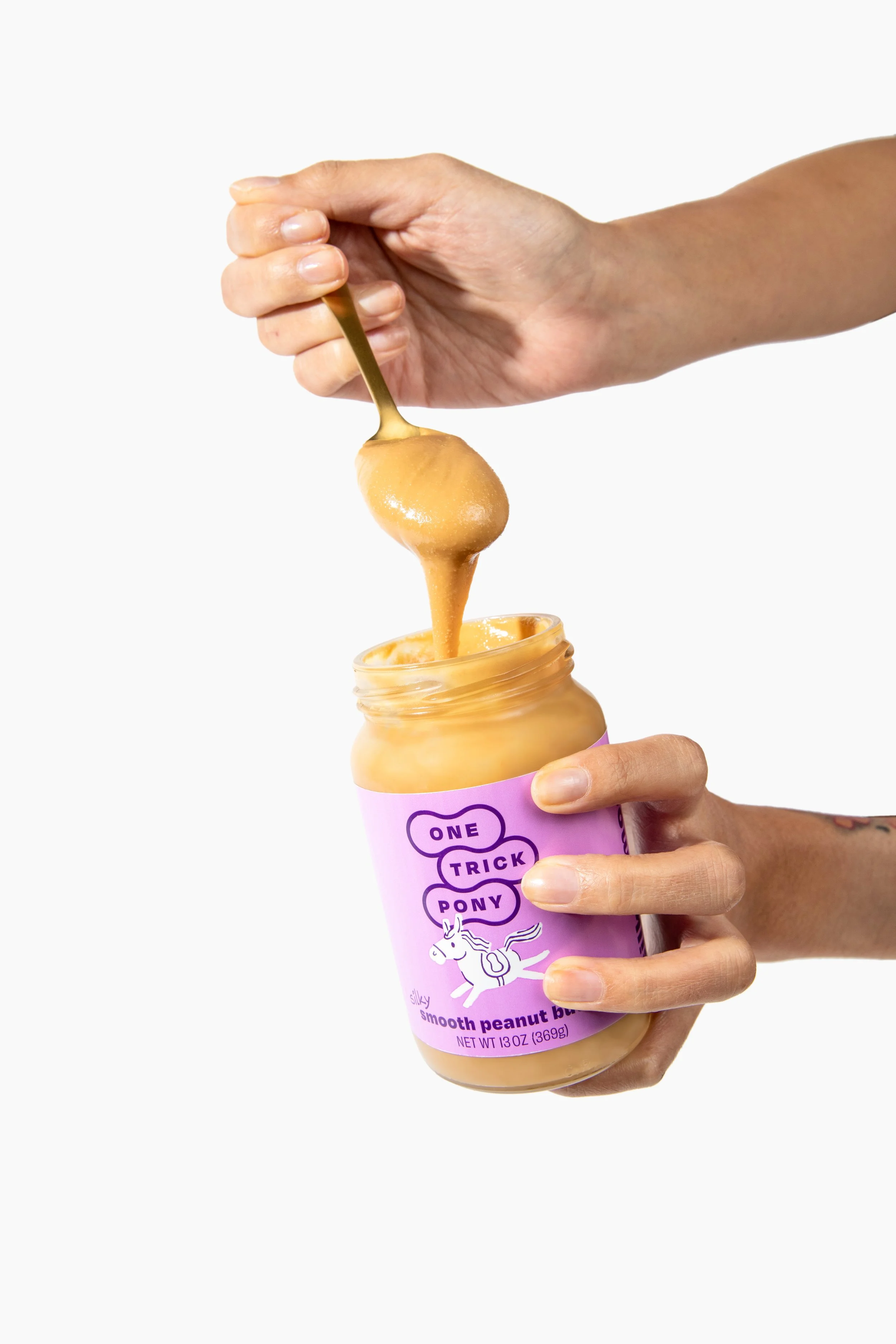
Photo Courtesy of Lucy Dana
What kind of tasks fill up the majority of your time?
One thing that I think is interesting is–when you are a founder and you are your own boss, everyone's like, “Oh, you must work all the time.” Part of that is true. You’re always thinking about it. I wake up at 4 am having stress dreams. But you take away a lot of the work around work, is what I'll call it.
For example, if I want to send an email campaign to my customers, at my old job, what I would have had to do is build a deck, get buy-in from all the people around me who would have input on that. I'd have to pull data on what I wanted to do, who I wanted to send it to and then meet with marketing and figure out the wording I wanted to use. And then I would have to meet with the [E-Commerce] Team and make sure it fit on their schedule. And then I would have to actually send the email, then recap it... So there's work around the work. Now, if I want to do that, I just think of the idea and do it. There's a lot less red tape and wasted time.
But in terms of actual tasks, I divide it [into] two buckets. The first bucket is creating the actual peanut butter. That is doing things like sourcing ingredients or talking with our manufacturer or arranging freight (the boat and the truck that the peanut butter moves around the country on) or talking to our warehouse about how they're packing orders and that kind of thing. The other half is actual demand generation. That's the marketing and sales. Anything that actually touches the customer. It's doing social media, our email marketing, pitching to grocery stores, doing tasting events so people can get the word out. In my head, it's like creating the supply and then creating the demand. You're building both sides, that's how I think about how I spend my time.
When you started, were you still at Blue Bottle as you were building up One Trick Pony? Or was it pretty clean cut–you had the idea, had everything lined up, and said, “Great, now I'm just going to quit and go do it!”
This is something people don't talk about enough, the financial burden of being an entrepreneur. I feel like I definitely quit my Blue Bottle job a little early. The advice is, “Do both for as long as you can.” We raised a little bit of money from friends and family, and my brother was basically like, “Nobody's gonna want to invest in this if you're only doing it halftime. They want to invest in someone who's super committed.”
I definitely quit my job on the earlier side, and the first year while [we] were not yet selling to consumers but building the supply chain, setting up our website, doing all the behind the scenes stuff, there [were] definitely days where I was like, “What am I doing? Is this a full time job?” If I could do it again, I would have kept my job a little bit longer and [tried] to do both while the setting up [was] a little bit slower. But once you have a company in the wild, it's much harder to do both and be good at both.
We raised money so that I could pay myself. But I cut my salary [by a] third of what I used to make at Blue Bottle. If you want to be a founder, you definitely need to go in eyes-wide-open. It's going to be a longer journey, [not] making a lot of money. I tried to save as much as I could for two years before. Go in knowing that your salary will probably be worse than if you were working a corporate job. The hope is that it [will] pay off down the line.
When did you have the idea for this versus when did it become a reality?
My brother was pitching me this idea for a year before I [took] it seriously. At Blue Bottle, I never worked on that side of the business. They call it CPG: Consumer Packaged Goods (selling their cold brew cans in grocery stores). I thought it was boring. You're just taking your product and selling it. And so my brother was pitching this idea, and I was like, “I don't want to do that.”
And then I was interviewing–when I was ready to leave Blue Bottle–at a bunch of different companies, in roles that were called “New Ventures” roles. It would be like building a company within another company. I wasn’t that excited about any of the opportunities I was getting. So, on a whim, I was like, “All right, I'll just do this with my brother.”
He had pitched the idea a year before, and we said “Okay” probably a year after that. And then it took us eight months–or, ten months–to get everything going and launched to the public.
You've expanded your product line a little bit. How did you decide to do it?
Our first expansion came in formatting expansion. When we originally launched, we launched three SKUs: Silky Smooth peanut butter, Kinda Crunchy peanut butter, and Unsalted peanut butter. And we launched in 13 ounce jars. And then stuff kind of happens where you're at events or you're hearing from customers, and they're telling you things like, “I would really love a travel size packet.” So, we decided to expand the formatting to start. Since our jars, we've launched a 9 pound tub and single serve, on-the-go packets.
But again, it was just our core SKUs, and we stumbled into it. We made our big tubs for food service so we could sell them to my brother's bagel delis [and] they could put [it] on a bagel. And then for national peanut butter day, we put the big tubs online [as] a funny thing. Like, “If you're really a peanut butter lover, you can buy this huge tub!” People bought it! And we're like, “Oh, maybe we're onto something.” So we kept them. It's trial and error, seeing what sticks.
We just launched our first not-core peanut butter product, crispy cookies. I would say, it wasn't so thought out. But if I had to pretend like it was, I would say you need to feel like you have a core customer base that can support it. We have a good number of people who buy online from us and a fair number of people on our email list. So, if you launch this product, is there going to be an audience waiting for it? And then the other side is, do you have the system set up operationally so it doesn't suck [up] all your resources? We already [had] our warehouse set up, we already [had] our website set up, so adding one more thing to the website or for our warehouse to store [was] no big deal. Versus, if we did it a year ago, it probably would have been a much bigger suck on our resources.
It's helpful to hear that some things happen in a less methodical way. Because that means that when you are making your own company and you make an impulsive decision, you don't feel like, “Why is everybody else so strategic while I'm just flinging out ideas?”
I like experimenting and trying. Part of it is–if you stay nimble, you can try whatever. And if it doesn't work, you just take it off the website. It's not the end of the world to launch something and then, [if] it doesn't work, pull it. I'm in the camp of “Done is better than perfect.” Instead of doing a bunch of research and figuring out what the perfect next product is, let's just see if people like cookies. If they do, we'll keep it up. If they don't, we'll try again. Just try stuff, see how it goes, and then you can always pivot.
Can you talk about going from having this idea to actually having a product that the FDA cleared?
With a food product, there's basically two routes people take. You can either self-manufacture or you can go to what they call a co-manufacturer. We went the co-manufacturer route because I think it's easier to get going. It means someone else produces your product for you versus setting up an entire factory. And in the beginning, when you don't have that much demand–we only had so many customers when we first launched–there's no way you can have a facility running full time just for your brand.
If you work with a co-manufacturer, they produce products for, let's say, 100 different companies so they're at full capacity, but each brand is only paying for a couple of days a month to produce their products.
The first thing to do is find a manufacturer who can make your product for you. You work with them on figuring out the recipe and the texture and making sure that it's exactly what you want. You're basically just sending samples back and forth until they have nailed what you want.
On the labeling side, it's funny: I was very worried about the FDA stuff. Basically, the way I describe it is–you're not stopping at a toll booth for them to say, “Yes, your label is correct and you've been approved. Now you can keep going.” It's like all the cars are speeding down the highway and only some people get pulled over and everything gets checked. So you're basically doing your own research, making sure that your label is up to par. There's a lot of online resources to make sure that your label is correct. You can even hire a lawyer to double-check and make sure everything is good. You have to call out allergens. Ours says “contains peanuts.” Duh, it's peanut butter. But there's a lot of resources you can find online.
One thing that's been super helpful to me is, I joined this Slack group called “Startup CPG.” It's a group of, like, 20,000 other people that are exactly like me. They're either starting or have started a small business. We're all just asking each other questions. So, in that group, someone would write “Hey, what are the rules for your label to be approved by the FDA?” And then people share resources. So that was a really helpful way–even though I am working alone most days–to get ideas checked by other people.
We actually just did have our first FDA check, they looked at all of our labels and then they [did] sampling. They pull jars and actually send it to their lab to be checked for salmonella, E. Coli, and stuff that we're checking for, but they're double checking that you're checking. We passed our first FDA approval, which was exciting, two years into business.
Making all the samples, getting your [co-manufacturer], getting your label, and then from there, you're off to the races. Some people can self-fulfill for a while, but we thought it would be good to get a warehouse up and running from the early days. Since we do both shipping directly to people's houses and also sending it to grocery stores, we wanted to hold on to a bunch of inventory at once and have our warehouse pack both of those things. So then [it’s] finding a warehouse, touring your warehouse, making sure that was all set up… but it was pretty straightforward, I would say, to get from idea to getting it produced.
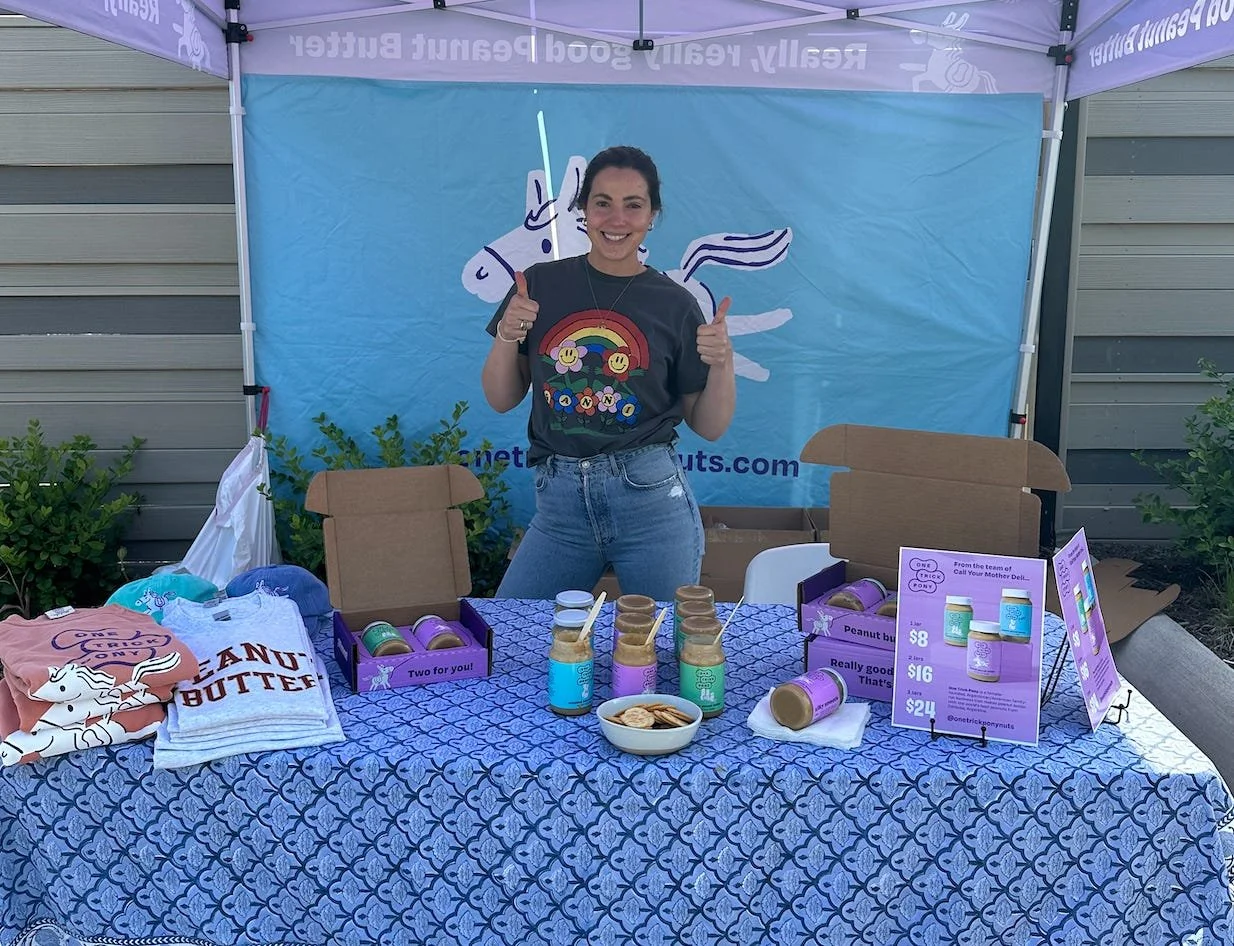
Photo Courtesy of Lucy Dana
You started this company with your brother and his wife. What's the collaboration like? Do you divide up the tasks based on your strengths? Do you all share the tasks?
I'm the only full time employee. Day-to-day, they spend 95% of their time running their bagel delis because it's a much bigger business. They have a team of, like, 100 people at this point. This business I can run basically on my own for now. They are part of the bigger picture thinking. And exactly what you said in terms of “Let's divide tasks based on what we're good at.” I'm much more of an operational person who's good at running the day-to-day operations.
My brother is definitely high level, brand, big visionary thinking. He's the one thinking about our innovation for the future, what our brand should look like, that kind of thing. And then my sister-in-law is a trained chef and she's also from Argentina, which is where we source our peanuts and produce the peanut butter. So, she's in the weeds there. She manages the relationship with our co-packer in Argentina and then she does everything culinary. If we need to change the salt in our peanut butter or whatever it is, she does all the testing for that.
It's pretty lucky that the three of us have fairly different skill sets because at this early stage, when you don't want to be paying employees, you want to have all of your bases covered as much as you can. We inadvertently do that very well.
What's your most favorite and least favorite part of your job?
Most favorite is probably looking back on end-of-month data, adding up all of our sales, seeing what did well, what didn't do well. Analyzing the last month and then making a game plan for the next month based on that. Least favorite is probably editing social media videos. I try to do it when I'm watching TV so it's kind of mindless…It is not the best.
Is there a time when peanut butter sales spike that is related to some holiday or seasonal change?
It's interesting. So, our first year in business I was trying to see, “Is there seasonality in this?” And the only thing that I could see was summer was a little bit slower than the rest of the year. I chalk that up to, people are traveling and their kid isn't going to school and [having] a PB & J everyday. We do subscriptions on our website, so people get their peanut butter shipped to their house every two or four or six weeks. A lot of people [were] skipping orders in the summer because they're not there due to travel and stuff. So that's what we saw the first year.
What we've done a good job at is trying to make up our own seasonal drivers. We do a big birthday push (for us it's in mid-November) to get ahead of the Black Friday, Cyber Monday stuff. We're not going to be able to compete with all these big brands doing huge deals, so we do a fun giveaway or a discount or a birthday party or whatever it is on November 17. And then we celebrate National Peanut Butter Day (which is in January) pretty heavily, in terms of giving out discounts and that kind of thing.
Because it’s not like everyone [says], “Oh, my gosh, I gotta have peanut butter for Thanksgiving,” we try to make up the holidays to drive it ourselves.
That's so smart. Looking ahead, where could this company go? Is the objective to sell it? Is it to merge with some other company? Is it to just keep growing?
We're definitely still in very early days. Even though we're two years in, I feel like we're just now hitting our groove in terms of figuring out what's working and growing and all of that. I would say definitely for the next few years, the focus is on “How big can we grow this?” and trying to expand our distribution. While we have some pretty loyal customers, it's still fairly hard to find our peanut butter in any city. I'm gonna make it so that you can go into any grocery store and find us.
What are some failures you experienced and what did they teach you? And what are some successes?
Yeah…I hate this because I feel like every interview you listen to people are like, “Oh, here's all my failures. But, you know, they all turned out to be amazing!” It's hard to hear when you're in the middle of the failure. But I think anything in retrospect does help you grow. Perspective is what it's all about. In the early days, our packaging was such a mess. [For] our first batch of peanut butter, the lids didn't fit on the jar. You would think, “How does that happen?” And I agree. Our co-packer sourced our jars and our lids for us and in my mind I'm like, “Of course they would close completely because that's such a normal thing.” But it was a good reminder to double check everything. That was definitely a huge failure. We were shipping peanut butter around the US and it was showing up leaking everywhere.
Double check everything because your standards may not be the same as someone [else‘s]. But it led us to get a lot of consumer feedback that we probably wouldn't have gotten, because if something goes well, you're not going to email the company. So it led to a lot of interaction with our customers and it's actually leading to a big packaging innovation launch that we're working on for next year. Our thought was “Yes, let's short-term fix these lids to actually [fit] the jar, but zooming out, can we totally reimagine the packaging of our peanut butter to be so different?”
In terms of successes, I feel like the biggest thing is getting the word out and what channels work for that. In the early days, we tried to seed our product to as many influencers as we could. We had people on the list who have millions of followers and people who have 5 thousand followers, seeing what actually moves the needle in terms of their followers clicking your website and buying stuff. It wasn't always the people with the biggest followings. I've been mentioned in a few newsletters, and some of them drive so much traffic, and you're like, “This is crazy. I didn't even know this person had a following.”
The biggest successes have come from seeing what works in terms of driving traffic and then leaning into that. A lot of these influencers that talk about parenting and how to feed your kids have such devout followers. If you could get someone who has 10,000 followers but a really devout following to post about you, that may actually [be] better than someone with a million followers who everyone is loosely following.
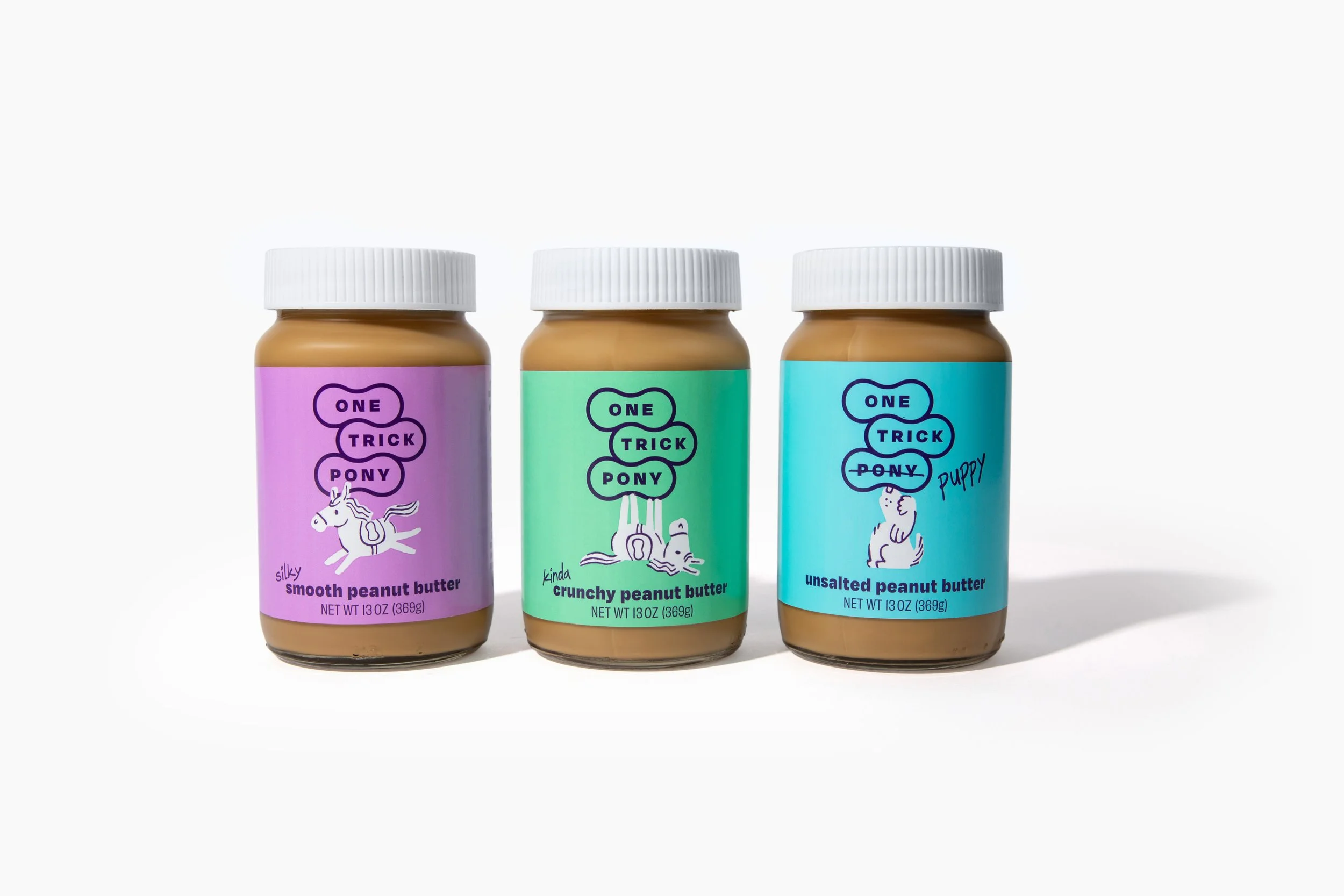
Photo Courtesy of Lucy Dana
You mentioned in one interview that you found testing creative strategies really frequently was a very helpful way of understanding what was working, what wasn't working. Can you touch on what that looked like?
If you want to test stuff, you have to be very clear about: what’s the metric you're monitoring and what are you judging success on? Facebook [and] Instagram is where we do the majority of our ad-spend. A lot of these companies now have pretty fleshed out dashboards where you can test a lot of stuff right within their dashboards. They make it fairly easy to upload different creatives.
What we did first was, I set a monthly budget, and was like, “This is how much I want to spend on ads for a month, but I don't know what's gonna perform well or not.” I created three different versions of an ad. One of them made it seem very UGC, User Generated Content. So, talking to the camera, saying, “Oh, you gotta buy this.” One was a photo and one was another video that was product shots with a voiceover. Keep everything else the same. Give them all the same budget, give them all the same audience. The only thing you're testing is the different ad content.
And then, let it rip for two weeks. You need to give it some time because the window that [the metrics] look back on, I think, is 7 or 14 days to see if people actually click the ad. Letting it rip and then making changes quickly is the biggest thing. If one of them is outperforming the other two, kill the other two immediately. [Don’t] drag [it] on for six months and be like, “I guess this is the best one.” Every day is wasted money. And then…I'm a little bit lazy. Once we've found good content that, quote, unquote, works (we have a good return on our ad spend) I've [let] that one run for a few months. Ideally, I would now make three more creatives and try to test them against the one that's working and try to see if I can find a new champion.
That's what I do within the channel. I'm also always testing new channels. Meta is our best performing ads channel in terms of what you get for your spend. For us, at least. But now I'm testing ad-spend on Reddit as well. If I can't get the same return on ad-spend that I can on Facebook, I'm going to cut the Reddit spend. It's all in the spirit of experimentation. Let's try it for a month, see what happens. The worst that happens is we waste a few hundred dollars.
I've ventured into the Meta ad space, but much lower level.
Originally we had someone running it for us and I was paying $1200 a month. Then I realized I could do this. If you watch a few of their videos, it's fairly easy to set up. [It’s] in their best interest for you to understand what's going on and to make it easy to run ads.